How To Make Kombu Dashi (Vegetarian Dashi) 昆布だし 作り方

February 12, 2013

by · 85 comments

in Quick & Easy, Sauces, Dressings & Condiments, Vegetarian

Kombu Dashi | JustOneCookbook.com

Last time when I shared the recipe for Japanese dashi stock, it was a combination of kombu and bonito flakes called Awase Dashi.  Today I’m sharing Kombu Dashi recipe, which is the vegetarian version.

Dashi is Japanese stock and is used in many Japanese dishes as the basic flavoring.  Dashi is typically made from kombu (kelp), bonito flakes (dried and smoked skipjack tuna that is shaved into thin flakes), sardine (iriko or niboshi), or a combination of all or two of them.  With good dashi, the umani creates an amazing taste so very little flavoring is required.

So how do we decide which kind of dashi to use for a particular dish?  Well, each household may have preference, but I wrote here about how I generally decide.

The great thing about Kombu Dashi is that it is vegetarian stock. You can always use Kombu Dashi if you are vegetarian.  It’s probably the easiest dashi you can make.  Enjoy!

Kombu Dashi | JustOneCookbook.com

Kombu Dashi (Vegetarian Dashi) Recipe

Prep Time: 5 minutes

Cook Time: 25 minutes

Yield: Makes 3 1/2 cups

Ingredients:

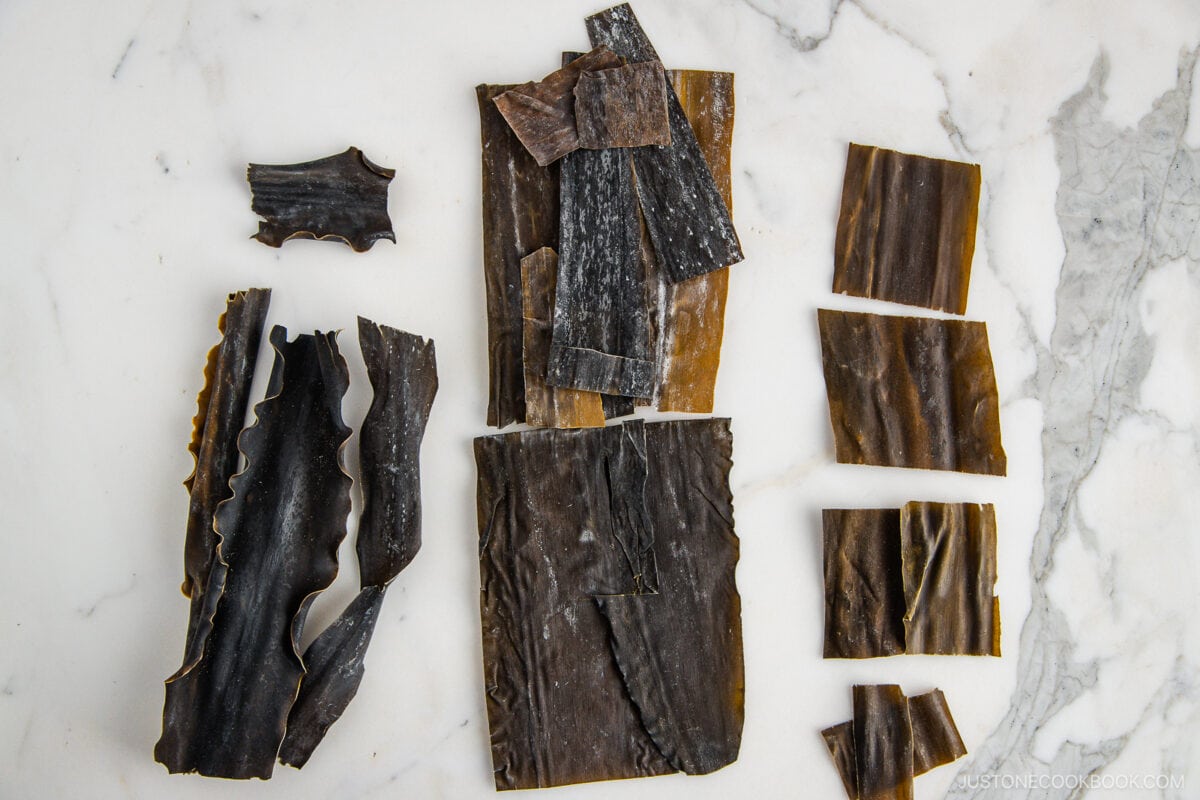
  • 0.7 oz (20 grams) kombu
  • 4 cups (1000 ml) water
  • You will also need:
  • A sieve
  • Paper towel

Instructions:

  1. Gently clean the dashi kombu with a damp cloth but leave the white powdery substances which contribute to the umami flavor in dashi. Do not wash the kombu!
  2. Make a couple of slits on the kombu.
  3. Make Kombu Dashi with Water (mizudashi)
  4. Put water and kombu in a large bottle and let it seep for overnight (10 hours) in the refrigerator. Discard the kombu and it's ready to use! Easy, right? You can keep in the refrigerator for 3-7 days or in the freezer for 3 weeks.
  5. Make Kombu Dashi with Boiling Water (Nidashi)
  6. Or, you can cook kombu. Kombu’s flavor comes out naturally from soaking in water. If you have time, soak for 3 hours or up to half day. If you don’t have time, you can skip this process. In a medium pot, put the kombu and water.
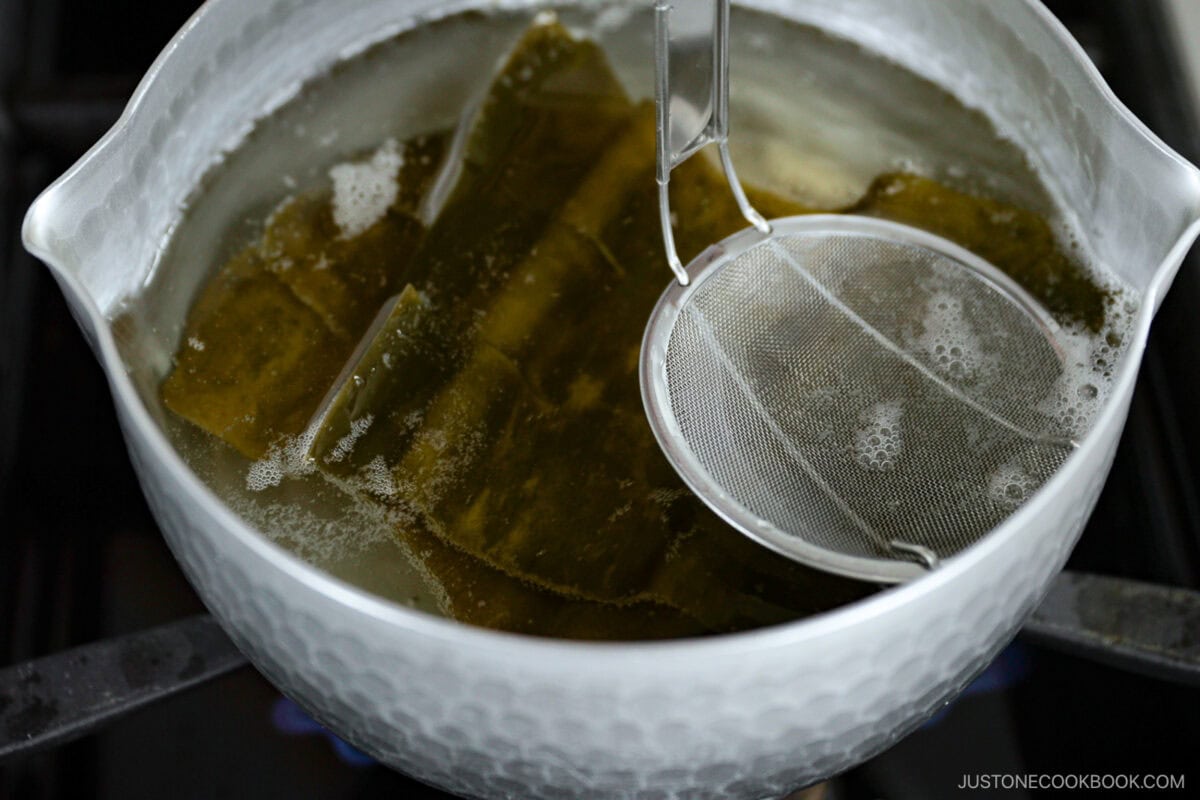
  7. Heat up the pot slowly on medium low heat. It will take 20-25 minutes to a boil. Meanwhile, clean the dashi by skimming the surface.
  8. Just before the dashi starts boiling, remove kombu. If you leave the kombu inside, the dashi will become slimy and bitter.
  9. Line the sieve with paper towel (cheese cloth/linen cloth) and set over a large bowl. Strain the dashi through the sieve.
  10. If you are not using the dashi right away, save it in a bottle and keep in the refrigerator for 3-7 days or in the freezer for 3 weeks.
http://justonecookbook.com/blog/recipes/how-to-make-kombu-dashi-vegetarian-dashi/

Previous post:

Next post:

Leave a Comment


9 + = 12

{ 82 comments… read them below or add one }

1 Reem | Simply Reem February 12, 2013 at 11:45 am

Nice Nami!
This is perfect specially, if someone is not into seafood right…
Thanks for sharing.

Reply

2 Laura (Tutti Dolci) February 12, 2013 at 11:47 am

I can just imagine the wonderful umami flavor from making your own dashi!

Reply

3 Eri February 12, 2013 at 12:00 pm

Niiice!!! and so easy!

Reply

4 Eileen February 12, 2013 at 12:10 pm

This looks so easy! I wish I’d realized just how easy it was to make kombu broth years ago–we’d definitely have been eating far more miso soup and noodles in broth and who knows what else. :)

Reply

5 Rosa February 12, 2013 at 12:16 pm

Thanks for sharing! “How to” recipes are great…

Cheers,

Rosa

Reply

6 My Kitchen Stories February 12, 2013 at 12:33 pm

Simple healthy and delicious. Your instructions and photos are so detailed and clear

Reply

7 Nandita February 12, 2013 at 12:37 pm

Loved this post Nami!! Loved the step by step pictures. A recipe can’t be more informative:)

Reply

8 Cucina49 February 12, 2013 at 2:08 pm

So pretty and so simple! It looks delicious, and I have to go back and read the post on dashi selection.

Reply

9 albertocook February 12, 2013 at 2:08 pm

I like this

Reply

10 A_Boleyn February 12, 2013 at 3:06 pm

I’m neither a vegetarian nor a purist when it comes to making all my stocks from scratch so I think I’ll stick with the granules. It’s lovely to see the traditional methods of making dashi however.

Reply

11 Jen Laceda | Tartine and Apron Strings February 12, 2013 at 3:08 pm

I know that kombu dashi is such an essential in Japanese kitchen. When I know I’ll be cooking lots of Japanese food one particular week, I’ll make a big batch of kombu dashi! It’s so good and fresh-tasting – perfect for Japanese recipes! Also perfect as an emergency broth for the kids to sip!

Reply

12 Rhonda (@diningalone) February 12, 2013 at 3:12 pm

Looks simple and tasty!

Reply

13 Al G February 12, 2013 at 3:48 pm

Neat!
No animals were killed or injured in the production.

If I’m not mistaken, can’t you use the kombu further as a vegetable or condiment by braising it with soy/ginger/garlic or????

Reply

14 Nami February 13, 2013 at 12:07 am

Hi Al! Thank you for your feedback! :) Yes, you are correct. I debated if I should talk about making those side dishes using the leftover kombu….but I personally don’t make it so I decided not to share. Maybe I’ll make a separate post one day. You must know Japanese food very well! :)

Reply

15 The Ninja Baker February 12, 2013 at 4:05 pm

Thank you, Nami-san! I was always taught that kombu will make the dashi bitter if kept in too long. But it looks like if soaked separately – outside the pan used for boiling – it turns out great =)

I do sincerely appreciate this recipe as my husband is not a katsuobushi (bonito flakes) fan. (He teases me when I eat it saying I’m eating “Kat” food because it is a fave of our kitties, too.)

Reply

16 Nami February 13, 2013 at 12:13 am

Hi Kim! Haha! Cat food made me laugh…that’s true. It must be cat’s favorite! There are a lot of different “theories” about how long to keep kombu in water, or to cook, etc.

Personally I think kombu dashi is better when you soak for a long time BEFORE cooking. However, we MUST take out the kombu before boiling because it gets really slimy and I don’t think it gives refine taste if you keep boiling with kombu. But there are different opinions even in Japan. :)

Reply

17 Baby Sumo February 12, 2013 at 4:25 pm

An informative post as always. :)

Reply

18 Julia Yuko Lee February 12, 2013 at 5:05 pm

Very nice and simple to follow. I was just looking into this and
wanted a recipe!

Reply

19 Nami February 13, 2013 at 12:14 am

Hi Julia! Yay! I’m glad this recipe will be helpful. Thank you so much for your kind feedback. I hope you make good dashi for your food! :)

Reply

20 Mi Vida en un Dulce February 12, 2013 at 5:32 pm

So this could be the base for other dishes? But I think that maybe at itself could be great, with some rice noodles…?

Reply

21 Nami February 13, 2013 at 12:15 am

Yes, we use dashi stock for soup base. However, the taste is more bland so we usually add a little bit of soy sauce and mirin (or sugar) to make noodle soup. :)

Reply

22 Jayne February 12, 2013 at 6:22 pm

I love all sorts of Japanese stocks. Just add some ramen and tofu and that will make my day. My awase miso has bonito flakes and grains in it so I rarely ever make my own stock. Just a tbsp of awase miso in hot water and there soup for my ramen. Thanks for letting me know kombu stock is really not that hard to make.

Reply

23 Yi @ Yi Resevation February 12, 2013 at 7:03 pm

Thanks for sharing this quick recipe on kombu dashi. I always thought all dashi had to have some bonito flakes but I just learned something new today. I made dashi once before then I decided to go with the dashi mix route to save some time. But seeing how easy the vegetarian one is I might just make my own kombu dashi next time I need. Thanks for sharing!

Reply

24 Mich Piece of Cake February 12, 2013 at 7:30 pm

Wow, that’s easy. Thanks, will try to make my own…

Reply

25 john@kitchenriffs February 12, 2013 at 7:40 pm

Wow! That’s so easy! I never knew that’s how you made vegetarian dashi. I definitely will be trying this. Thanks so much.

Reply

26 Jenny February 13, 2013 at 1:17 am

great idea, Nami, thanks.

Reply

27 Hotly Spiced February 13, 2013 at 1:42 am

I’ve always been interested in knowing about how to make dashi because I’ve never made it and didn’t grow up with it. Thank you so much for sharing this xx

Reply

28 Belinda @zomppa February 13, 2013 at 3:24 am

Great thing to have on hand!

Reply

29 Sandra's Easy Cooking February 13, 2013 at 4:36 am

It hard to capture the dashi, but your did such a great job. I love kombu dashi…gives such a nice deeper flavor.

Reply

30 Ramona February 13, 2013 at 5:59 am

Love both your dashi recipes. This one is very nice. :)

Reply

31 Sissi February 13, 2013 at 6:15 am

I never make konbu dashi. My “express” dashi (when I am in a hurry really and need a tiny amount) is only katsuobushi. Sardine dish is very special and strong for me… I made it once and realised it’s not as versatile as the two dashi you have mentioned. I have never thought about it, but it’s an excellent idea to present this dashi as vegetarian… I am probably too much of a carni- and piscivore to think about it ;-)

Reply

32 Mandy - The Complete Cook Book February 13, 2013 at 6:31 am

Nami, there is always something interesting happening in your kitchen. I love learning something new with every visit.
:-) Mandy xo

Reply

33 Nik@ABrownTable February 13, 2013 at 8:28 am

This is a useful recipe to have, it is good to have a vegetarian option.

Reply

34 Kristy February 13, 2013 at 9:31 am

I love learning things here from you Nami. I bet this dashi would be more to Miss A’s liking. I hope you are having a great week and that everyone is healthy again. :)

Reply

35 Elizabeth @Mango_Queen February 13, 2013 at 11:56 am

This is perfect for our family, especially during Lent when I need a lot of meatless meal ideas. Thanks for sharing how to make this kombu dashi, Nami!

Reply

36 Hester @ Alchemy in the Kitchen February 13, 2013 at 12:08 pm

I’ve never made dashi but you make it sound so easy. Great step-by-step photos too, Nami.

Reply

37 yummychunklet February 13, 2013 at 1:02 pm

Looks perfect!

Reply

38 Raymund February 13, 2013 at 1:30 pm

Umami is such a great flavour, it even affects the whole dish.
Nice shaing this one.

Reply

39 Katherine Martinelli February 13, 2013 at 1:44 pm

I’ve been wanting to make dashi for ages and ages – I am definitely bookmarking this! Thanks Nami :-)

Reply

40 GourmetGetaways February 13, 2013 at 3:29 pm

Oh such beautiful images! Thank you for sharing this recipe :)

Reply

41 Evelyne@cheapethniceatz February 13, 2013 at 4:14 pm

Wow this is practically lke making tea, the hot and cold brew method. Very cool! And great itps on preparing the kombu, would not have known that.

Reply

42 Juliana February 13, 2013 at 6:04 pm

Oh Nami, thank you so much for all your step by step pictures…I love it!
Have a Happy Valentine’s Day!

Reply

43 peachy @ The Peach Kitchen February 13, 2013 at 7:36 pm

So that’s how you make kombu dashi!

Reply

44 Lorraine @ Not Quite Nigella February 13, 2013 at 7:39 pm

This is so clever Nami! I’ve never made my own dashi before but I would love to one day!

Reply

45 Reese@SeasonwithSpice February 13, 2013 at 8:14 pm

This is really useful, Nami! We usually use kelp in Chinese hot pot or soup alike as one of the ingredients, but it never crossed my mind that I can make an easy yet flavorful soup stock by using it alone with water. Such is the problem of over-looking of one powerful ingredient! Thank you for sharing this. I can easily use this quick vegetarian stock in many dishes.

Reply

46 Sylvie @ Gourmande in the Kitchen February 14, 2013 at 12:09 am

I never knew you could just soak it in the fridge and it would be ready to go! What a great time saving tip.

Reply

47 Lynna February 14, 2013 at 12:53 am

I love that there’s a vegetarian option for dashi. I`m not vegetarian, but still! :)

Reply

48 bamskitchen February 14, 2013 at 1:38 am

Great little step by steps Nami-san! Wishing you and your family a very Happy Valentines Day. Take care, BAM

Reply

49 Katerina February 14, 2013 at 3:20 am

I love how simple it is and must add so much flavor to any dish!

Reply

50 wok with ray February 14, 2013 at 6:51 pm

I think of all the delicious Japanese dishes, Dashi is something I can make because it looks very simple and when you show how to make it. . . for sure it will be very easy. Thank you for teaching us all of these delicious but simple recipes, Nami!

Reply

51 mjskit February 14, 2013 at 8:04 pm

That’s it? Each of these methods is as easy as making a cup of tea. Thanks for showing us the real thing and how easy it is.

Reply

52 Charles February 15, 2013 at 2:47 pm

I don’t believe it – I was just thinking about this today when I was in the Japanese grocery store in Paris. I was thinking how I’d love to serve a tempura udon soup to a vegetarian friend of mind but wasn’t sure how to go about it since I didn’t have veggie-friendly dashi, and then I check your blog and you’ve posted a vegetarian stock recipe! Nami to the rescue… thanks a lot :)

Reply

53 Georgia @ The Comfort of Cooking February 15, 2013 at 3:17 pm

What a lovely recipe, Nami. It looks absolutely delicious! I hope you have a great weekend with your family.

Reply

54 Kath (My Funny Little Life) February 16, 2013 at 2:32 am

Thank you for posting this! My husband is allergic to animal protein, so I wondered whether it’s possible to make a vegetarian dashi stock. I happen to have lots of kombu here because I use it for soaking legumes. Will try this! :D

Reply

55 TheKitchenLioness February 17, 2013 at 12:39 am

Nami, Kombu Dashi has such a wonderful “clean look” – it looks amazing and it is important to master the technique of making this stock as a base for many other delicious recipes!
More wonderful weekend wishes!

Reply

56 Allison (Spontaneous Tomato) February 17, 2013 at 2:05 pm

Wow, I’m definitely going to bookmark this for future reference. The mizudashi method seems so amazingly easy; I didn’t know you could make dashi just by soaking kombu in water… thanks so much for demonstrating how to do this!

Reply

57 Christine @ Cooking Crusade February 18, 2013 at 12:22 am

Wow, so easy! Great to know that you can make a vegetarian version of this Japanese staple :)

Reply

58 Food Jaunts February 18, 2013 at 9:46 am

I didn’t know you could just soak it overnight! That sounds perfect and so much better than the packets I always end up using.

Reply

59 Daniela February 18, 2013 at 11:38 am

What a great idea! I always wanted to learn how to make Japanese dashi stock, over all the vegetarian version.
Thank you so much for sharing!
For which dishes would you recommend to you use this stock mostly ?

Reply

60 Nami February 18, 2013 at 10:46 pm

Hi Daniela! You can use the Kombu Dashi for all the Japanese recipes that require “dashi” ,especially if you are vegetarian.

However, kombu dashi is especially used when the flavor of ingredients are subtle. When the main ingredient is fish, I usually use Kombu Dashi because bonito flakes from Awase Dashi may overpower the flavor of the fish I’m cooking.

More details here: http://justonecookbook.com/blog/how-to/how-to-make-dashi-jiru/

Reply

61 Kiran @ KiranTarun.com February 19, 2013 at 1:15 am

I’m back to commenting! It’s been a while. So busy traveling!

Anyways, this dashi stock is not only easy. Bet it adds “umph” to the dishes :)

Reply

62 Patty February 23, 2013 at 6:55 am

Great tutorial Nami! I’ve always wondered how to prepare kombu-now I know!!
I like a light broth as a comforting starter before dinner;-)

Reply

63 Lori Lynn February 24, 2013 at 8:03 am

I thought it would be more complicated? This is so easy! Why use the bouillon?
LL

Reply

64 Gomo February 28, 2013 at 3:22 pm

Great post Nami! I love kombu dashi. It adds such subtle, but great, flavor to dishes!

Reply

65 Sam Bear March 2, 2013 at 12:04 am

I just bought some Kombu today and I want to make this stock but I’m not sure which one will yield a stronger flavour. Which preparation style (mizudashi or Nidashi) do you recommend for a stronger stock?

Reply

66 Sam Bear | A Curiosity March 2, 2013 at 8:54 pm

In the mizudashi preparation style, should I remove the kombu from the water after it has steeped over night? Also, can the kombu used in the nidashi style be reused in the mizudashi style?

Reply

67 Nami March 2, 2013 at 10:32 pm

Hi Sam! I just edited the recipe, but you discard the kombu after the overnight soaking. Also, after “nidashi” the essence is weak so the flavor may not be desired. Hope this helps! :)

Reply

68 Sam Bear | A Curiosity March 2, 2013 at 10:41 pm

Thanks for the reply! I just did a second soak/simmer of the kombu and just reduced the stock to almost half of what it was originally to get a stronger flavour!

Reply

69 Nami March 3, 2013 at 8:44 pm

Great! You made a full use of kombu! :)

Reply

70 Lauren March 5, 2013 at 10:50 am

Thank you for posting this! I have been avoiding miso soup for so long because I’m a vegetarian and had no idea it was this easy to make the dashi. Wonderful and super easy!

Reply

71 Nami March 6, 2013 at 8:54 am

Hi Lauren! I’m so happy to hear that you now know about Kombu dashi! Kombu dashi is more subtle than other dashi, but it is very delicious. A lot of people use Kombu dashi for miso soup while I like Awase dashi for my miso soup. You can try various kinds of miso for your liking, add vegetables, and you can arrange however you like it. I hope you enjoy making miso soup at home. :)

Reply

72 Baking Scientist March 25, 2013 at 12:07 am

Thanks Nami for the detailed method and photos! If i use the first method, ie leave in fridge for overnight, can i heat up the stock and add bonito flakes to make awase dashi?

Reply

73 Baking Scientist March 25, 2013 at 11:16 pm

Hi Nami, I tried that and it works :) I made Nabeyaki Udon for lunch today and my girl said it tasted like what she usually eats at the Japanese restaurant nearby haha, I don’t think it is comparable but it is my first attempt and I am glad at the result :) Thanks for sharing the recipes :)

Reply

74 Nami March 26, 2013 at 12:05 am

So sorry for my late response! I’m glad your approach worked! Basically instead of step #4 of Awase Dashi recipe (http://justonecookbook.com/blog/recipes/how-to-make-dashi/), you let the kombu soak over night, and skip to step #7! That’s a very creative method actually and I like it. Thank you so much for your feedback!! I wish I could eat your Nabeyaki Udon…. :)

Reply

75 Baking Scientist March 26, 2013 at 5:50 pm

Thanks Nami! I don’t think my Nabeyaki Udon was up to standard yet, some blunders like I put in the leeks too early so they were too cooked :p But I really enjoyed the process of cooking we thought it really smell like the Nabeyaki Udon at the Japanese restaurant, haha. Must be the dashi soup that helps create that aroma :)

Reply

76 Baking Scientist April 9, 2013 at 8:50 pm

Hi Nami, my hubby saw my nabeyaki photo and said it did not look like one at all! :( i guess i still have to improve the “look” of my dishes :p

Reply

77 Nami April 11, 2013 at 11:03 am

It’s easy to say the pictures are not good, but taking good pictures of food is always a challenge! I struggle all the time… :)

Reply

78 Baking Scientist April 13, 2013 at 7:03 pm

Thanks Nami for your encouragement :)

Reply

79 YLK March 25, 2013 at 11:23 am

Thanks for your lovely website.

Regarding kombu, which brand do you use?
I saw a kombu photo in your pantry but
was not able to identify the brand.

Reply

80 Nami March 26, 2013 at 12:14 am

Hi YLK! Thank you for your kind words!

There are usually several brands available in stores (Japanese or Asian), and I don’t have a particular brand that I buy but I usually pick one that’s made in Japan (or imported from Japan – so there is no English language on package). There are many kinds of kombu, but please make sure to buy kombu for dashi – it should say “dashi kombu”.

Hope that helps.

Reply

81 YLK March 26, 2013 at 8:21 pm

Thanks for your response.

The dashi kombu that I recently bought (from Ranch 99) is the following …
http://www.amazon.com/Welpac-Dashi-Kombu-Dried-Seaweed/dp/B00012OHZ6

The Wel-Pac brand is imported by JFC and is a product of Korea (not Japan).

The Shirakiku brand (that I tried before) seems harder/stiffer and darker in color when dry.

Reply

82 Nami March 27, 2013 at 11:41 pm

Hi YLK! I’ve seen this package before and I remember I had used it too. Korea uses kombu a lot in their cooking and I’m sure the quality is very well too. Thanks for letting me know! :)

Reply

{ 3 trackbacks }