

This post may contain affiliate links. Please read my disclosure policy.
Napolitan at a Glance
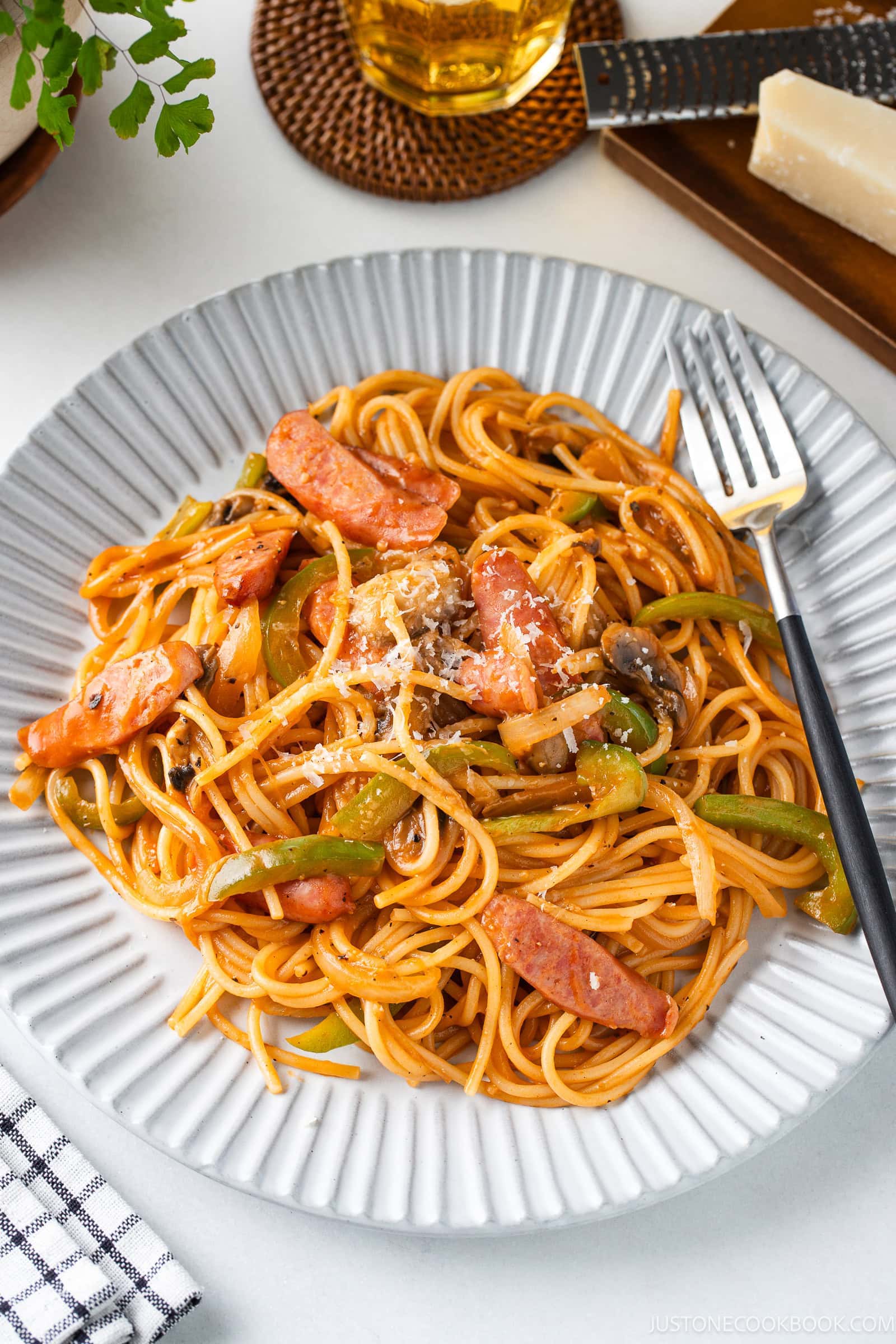
Napolitan (ナポリタン) is a classic yoshoku (Japanese-style Western dish) of spaghetti in a creamy, ketchup sauce. Chef Shigetada Irie created it at Yokohama’s Hotel New Grand in 1945 using tomato sauce. As the dish spread to kissaten (cafe restaurants), cooks swapped in shelf-stable ketchup to create the version we know today.
Why You’ll Love It
- Ready in 20 minutes – Ideal for a quick lunch or weeknight dinner using common pantry staples.
- Ketchup you won’t recognize – Cooked down with Worcestershire sauce and butter, the sauce turns sweet, tangy, and savory.
- A taste of retro Japan – Recreate the nostalgic napolitan pasta served at Japan’s kissaten cafes in your own kitchen.
What readers say
SYLKE K
“A lovely, well rounded dish and so fast. Honestly I wouldn’t have thought this contains ketchup if I had not cooked it myself.”
My Recipe Story
Napolitan is the pasta my son asked for by name. Whenever I asked what he wanted for lunch, this was the answer. My kids like the bell peppers cooked soft rather than crunchy, so that’s how I make it at home — one of those small adjustments every family lands on. Every kissaten in Japan has its own version too.
If you love Japanese-style pasta, try my Ume Shiso Pasta, Miso Butter Pasta with Tuna and Cabbage, and Creamy Mushroom and Bacon Pasta next!
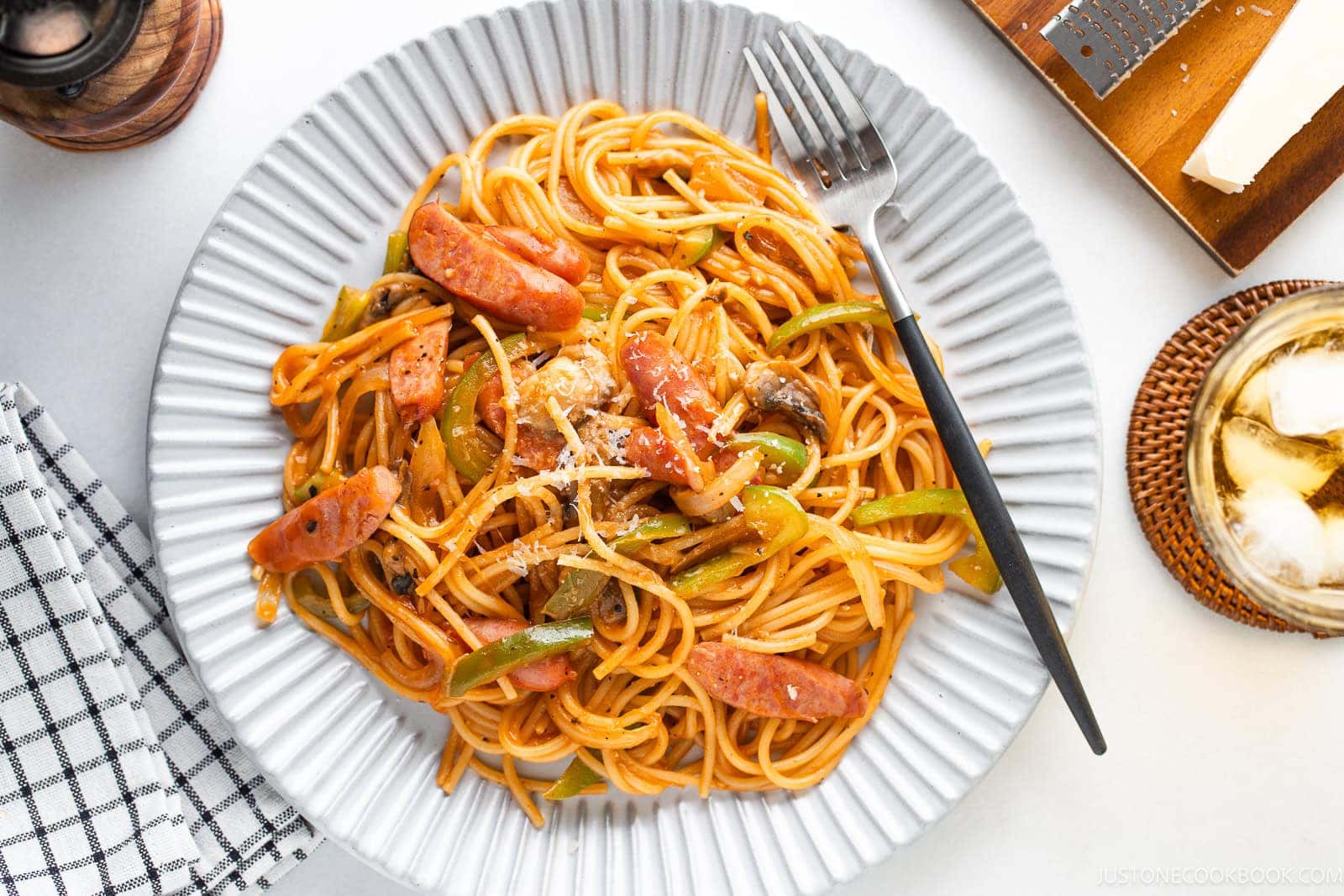
Key Ingredients for Napolitan
- Spaghetti – I recommend 1.6 to 1.9mm spaghetti as it helps hold the sauce and keeps its chew after cooking.
- Ketchup, Worcestershire sauce, milk (optional), sugar (optional) – Ketchup and Worcestershire sauce are the key seasonings, but milk adds more creaminess and sugar helps balance the tanginess.
- Sausage – arabiki, kurobuta, or other sausage; or substitute ham or bacon
- Mushrooms
- Green bell pepper
- Onion
- Garlic
- Butter and extra virgin olive oil
- Kosher salt and black pepper
- Parmigiano-reggiano (Parmesan cheese)
Find the printable recipe with measurements below
Jump to RecipeHow to Make Napolitan
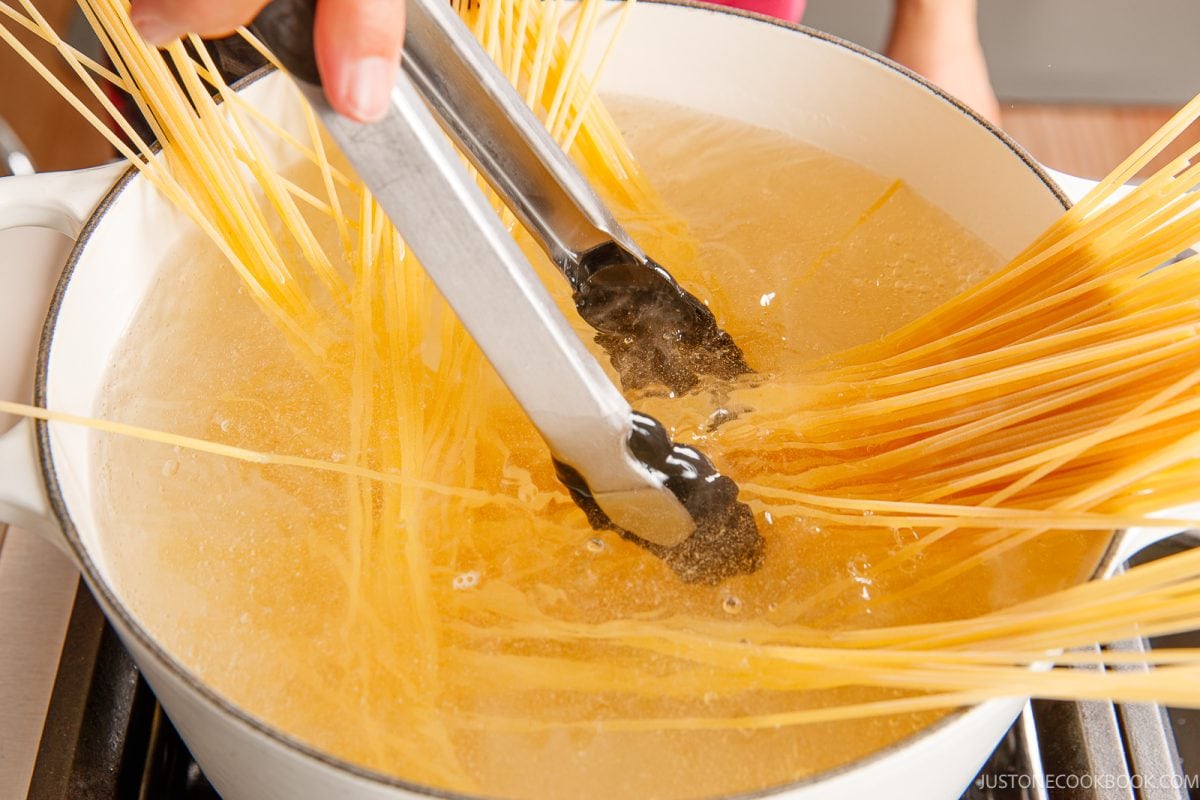
- Boil the spaghetti. Salt a large pot of boiling water and cook the spaghetti per the package directions. Reserve some pasta water before draining.
- Prep the ingredients. Thinly slice the onion, bell pepper, mushrooms, and sausages. Stir the ketchup, Worcestershire sauce, milk, and sugar in a bowl.
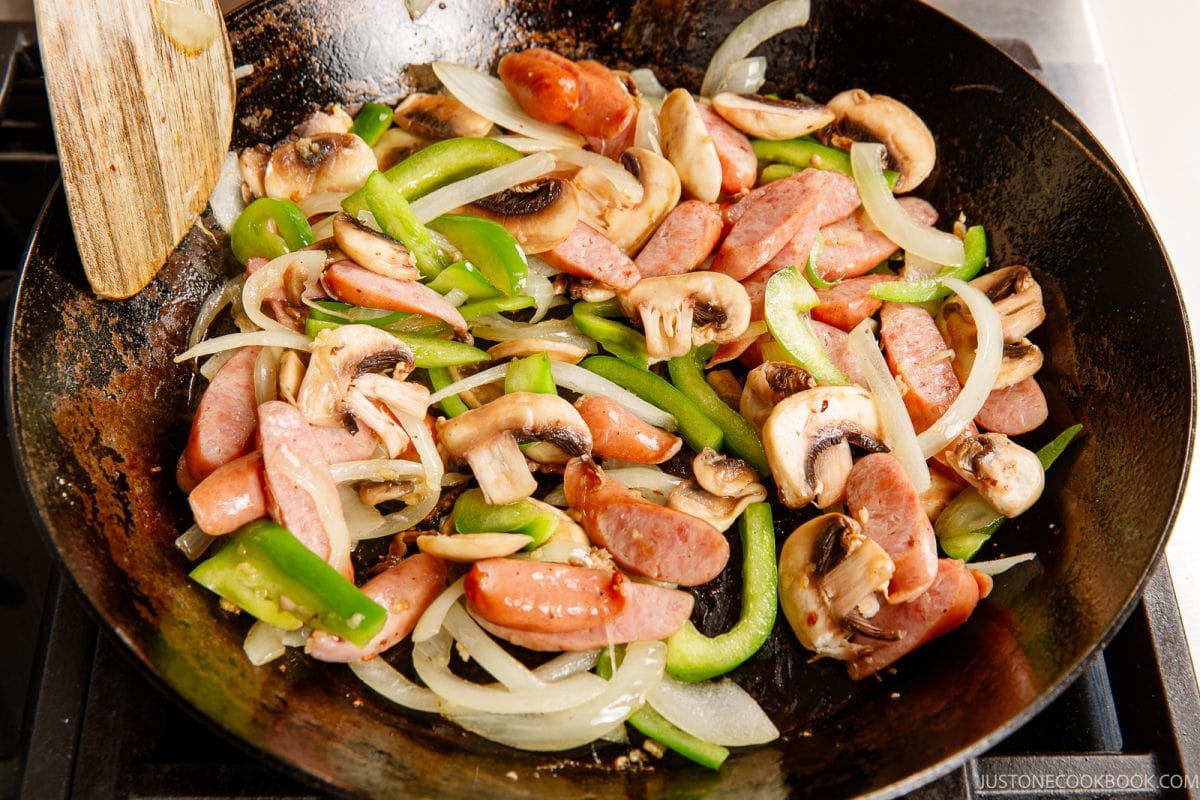
- Cook the filling. Sauté crushed garlic in olive oil until fragrant, then add the onion. Add the sausages, then the bell pepper and mushrooms, and cook until tender. Season with salt and pepper.
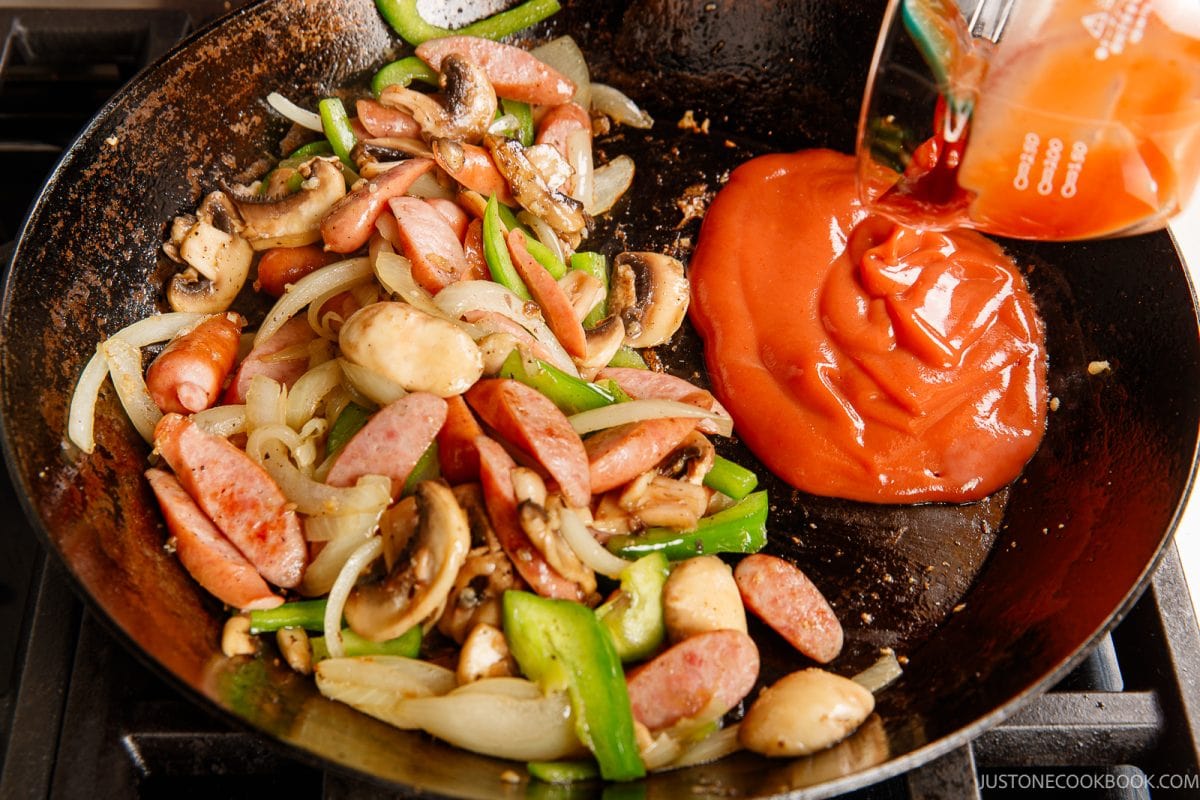
- Add the sauce. Push everything aside, pour the sauce into the pan, and let it bubble. Mix to coat, loosening with pasta water if needed.
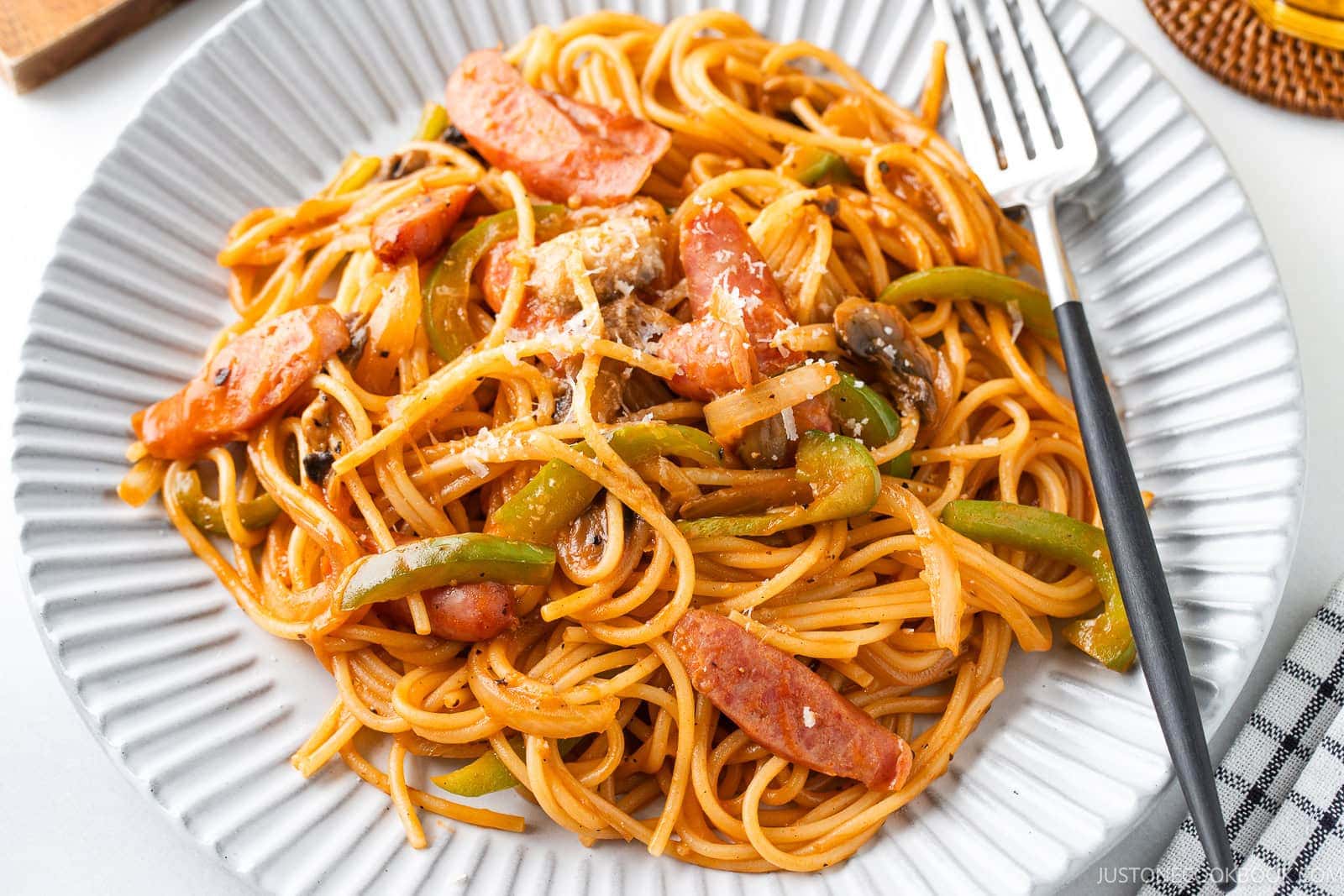
Toss and serve. Add the drained spaghetti and butter, and toss to coat. Serve right away with shaved Parmesan.


Nami’s Recipe Tips
- Have the sauce ready before the pasta is – The spaghetti keeps softening the moment it leaves the water, so the sauce should be waiting for it, not the other way around.
- Ketchup brands taste different – I use this organic ketchup, but any good one works. For an authentic Japanese flavor, look for Kagome Tomato Ketchup at a Japanese grocery store.
- Reserve the pasta cooking water – The starch in it acts as a binder and holds the emulsion together, so the sauce thickens without the butter separating out.
- Don’t cook the spaghetti al dente – Napolitan is meant to be softer than Italian pasta. Cook it for the full package time, or a minute past.
- Cook the vegetables to your family’s taste – Keep the bell peppers crunchy, or slice them thin and cook them soft if that’s what your family prefers. Take the onion a little further than you think, short of caramelizing, to draw out the sweetness.
- Finish with a tablespoon of butter – It rounds off the ketchup’s sharpness and gives the sauce its gloss. Don’t skip it.
- For a true kissaten texture, cook the pasta a day ahead – Boil the spaghetti, drain it, toss it with a little oil so it doesn’t clump, and refrigerate overnight. The strands absorb water all the way through, so the next day the sauce soaks into them instead of sitting on the surface.
Storage and Reheating Tips
To store: This dish tastes best fresh, so I don’t recommend making extra. If you have leftovers, refrigerate them in an airtight container for up to 3 days or freeze for up to 1 month.
To reheat: Warm the pasta in a frying pan over medium heat, adding a splash of water to loosen the sauce.
Variations
Feel free to mix and match based on what you have in the fridge or pantry.
- Vegetarian. Leave out the sausage and add extra mushrooms. A mix of shiitake and button mushrooms gives more texture.
- Add peas. Swap in ½ cup of green peas or sugar snap peas for the bell pepper, or add them alongside.
- Top with a fried egg. Slide a sunny-side-up egg over each plate. The runny yolk makes the sauce even richer.
- Mix up the mushrooms. Use shiitake, cremini, or a blend in place of button mushrooms for a deeper, earthier flavor.
- Add heat. Stir dried red chili flakes into the pasta, or set out hot sauce at the table.
What to Serve with Napolitan
Round out the meal with a few sides:
- Corn Potage – Warm, silky Japanese corn soup that rounds out a cozy weeknight dinner.
- Japanese Potato Salad – Its creamy, tangy bite balances the sweet ketchup sauce for a satisfying plate.
- Green Salad with Carrot Ginger Dressing – A crisp, zingy salad that cuts through the richness of the pasta.
- Ebi Fry – Crisp, panko-breaded fried shrimp turns the meal into a classic yoshoku plate.
FAQ
Why is it called Napolitan?
The name nods to Naples (Napoli), Italy, though the dish was created in Japan. In Japanese, R and L share one sound, so you’ll also see it spelled Naporitan.
What sausage works best?
Kurobuta or arabiki Japanese sausages give the most authentic taste. Ham, bacon, or wieners all work if that’s what you have on hand.
How is this Japanese spaghetti different from Italian pasta?
Italian pasta leans on fresh tomatoes or olive oil, while this Japanese spaghetti builds its sauce from ketchup. The result is sweeter, softer, and more comforting. It’s one of the most popular pasta dishes in Japan.
Is Napolitan spicy?
No, this Napolitan pasta is mild and slightly sweet, so it’s kid friendly. Cafes in Japan serve it with Tabasco sauce and Parmesan on the side, so you can adjust the heat.
I’d love to hear how yours turned out! 💛 Please leave a star rating and comment below to share your experience. Your feedback not only supports Just One Cookbook but also helps other home cooks discover recipes they can trust.
Napolitan (Japanese Ketchup Spaghetti)

Ingredients
For the Sauce Ingredients
- 5 oz sausages (4–6 pieces; see Notes for substitute)
- 4 mushrooms (2.5 oz, 70 g)
- ¼–½ green bell pepper (2.5 oz, 70 g)
- ½ yellow onion (3.5 oz, 100 g)
- 1 clove garlic
- ¼ tsp Diamond Crystal kosher salt
- ⅛ tsp freshly ground black pepper
- 1 Tbsp extra virgin olive oil
For the Seasonings
- ⅓ cup ketchup (use Kagome Tomato Ketchup for an authentic taste)
- 2 tsp Worcestershire sauce (I use Lea & Perrins)
- ½ Tbsp milk (optional)
- 1 tsp sugar (optional)
For the Pasta
- 7 oz spaghetti
- 1½ Tbsp Diamond Crystal kosher salt
- 1 Tbsp unsalted butter
- ¼ cup pasta water (if needed)
For Serving
- 2 Tbsp Parmigiano-Reggiano or Parmesan cheese
Instructions
Before You Start
- Gather all the ingredients. Start boiling a large pot of water (I use a 4-QT heavy-bottomed pot).

To Prepare the Ingredients
- Add ⅓ cup ketchup, 2 tsp Worcestershire sauce, ½ Tbsp milk (optional), and 1 tsp sugar (optional) to a small bowl. Mix together and set aside.Nami's Tip: Both are optional, but the milk makes the sauce creamier and the sugar gives Napolitan its characteristic sweetness.

- Cut ½ yellow onion into thin slices.

- Cut ¼–½ green bell pepper in half crosswise (if it's long), and cut into thin strips.

- Cut 4 mushrooms into thin slices.

- Cut 5 oz sausages diagonally into thin slices.

To Boil the Spaghetti
- Add 1½ Tbsp Diamond Crystal kosher salt and 7 oz spaghetti to the boiling water. Stir to keep the noodles from sticking to each other. Cook according to the package directions.Make the sauce while it cooks so both finish together. Don't drain the spaghetti when it's done—you'll need to reserve ¼ cup pasta water shortly.Nami's Tip: Napolitan isn't served al dente. Cook the spaghetti for the full package time or a minute past it—the softer texture is part of the dish.

To Cook the Sauce
- Heat a large frying pan over medium heat. Add 1 Tbsp extra virgin olive oil and distribute it evenly. Crush 1 clove garlic with a garlic press and add it to the pan. Sauté for 1 minute until fragrant.

- Add the onions and sauté for 2–3 minutes until wilted.

- Add the sausages and sauté for 1 minute.

- Add the bell peppers and mushrooms and sauté until tender.

- Season with ¼ tsp Diamond Crystal kosher salt and ⅛ tsp freshly ground black pepper.

- Push the ingredients to one side. Add the sauce mixture to the empty side of the pan. When it starts to bubble and thicken, about 30 seconds, mix it together with the sausages and vegetables.Nami's Tip: Cooking the ketchup on its own takes the sharp edge off and brings out the spices already in it—that mellow taste is what makes Napolitan taste like a kissaten made it.

- Scoop ¼ cup pasta water from the pot. If the sauce looks too thick, stir in 1–2 Tbsp of pasta water to loosen it. Add more if needed.Nami's Tip: The starch in this salty pasta water acts as a binder and holds the emulsion together, helping the sauce thicken without the fat and water separating.

- Mix to combine, and let the sauce simmer and reduce a bit. Nami's Tip: If the sauce tastes too acidic, stir in a little mirin or sugar here. The butter in the next step softens the acidity further and adds creaminess.

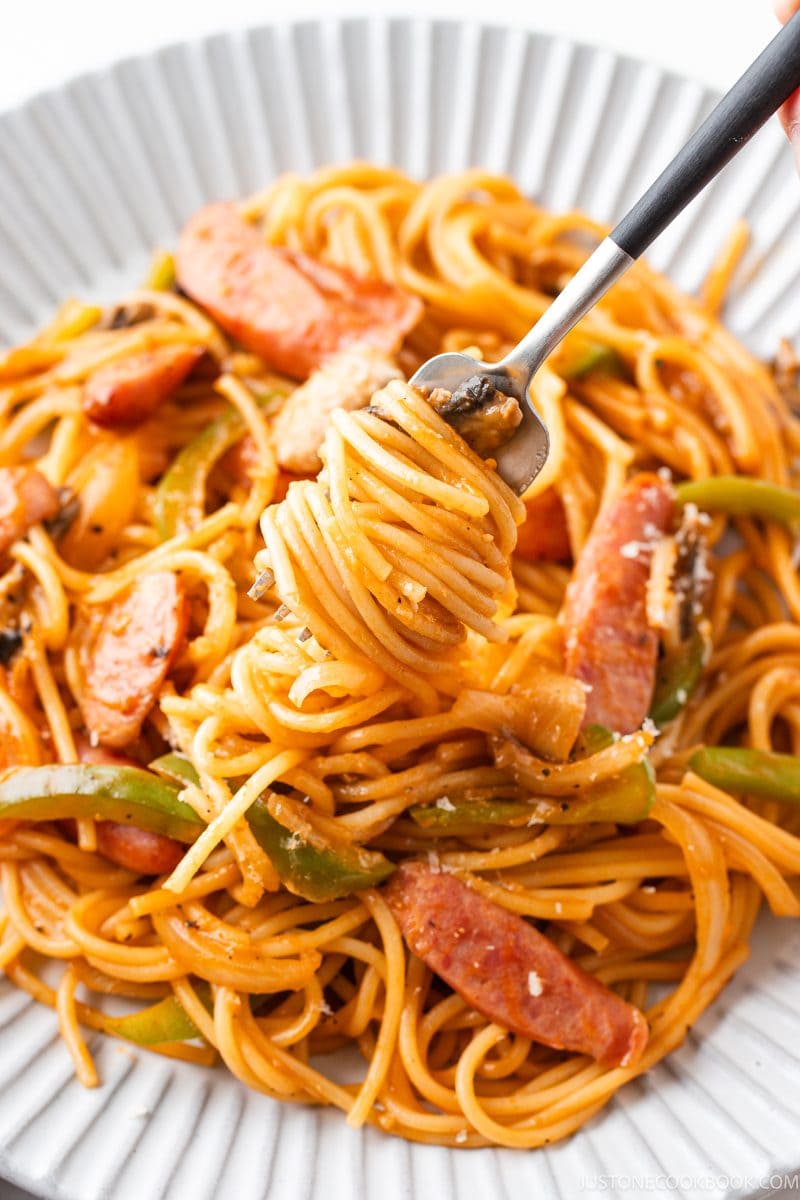
- Once the spaghetti is done, drain it and add it to the pan with the sauce. Add 1 Tbsp unsalted butter and toss with tongs until the pasta is evenly coated.

To Serve
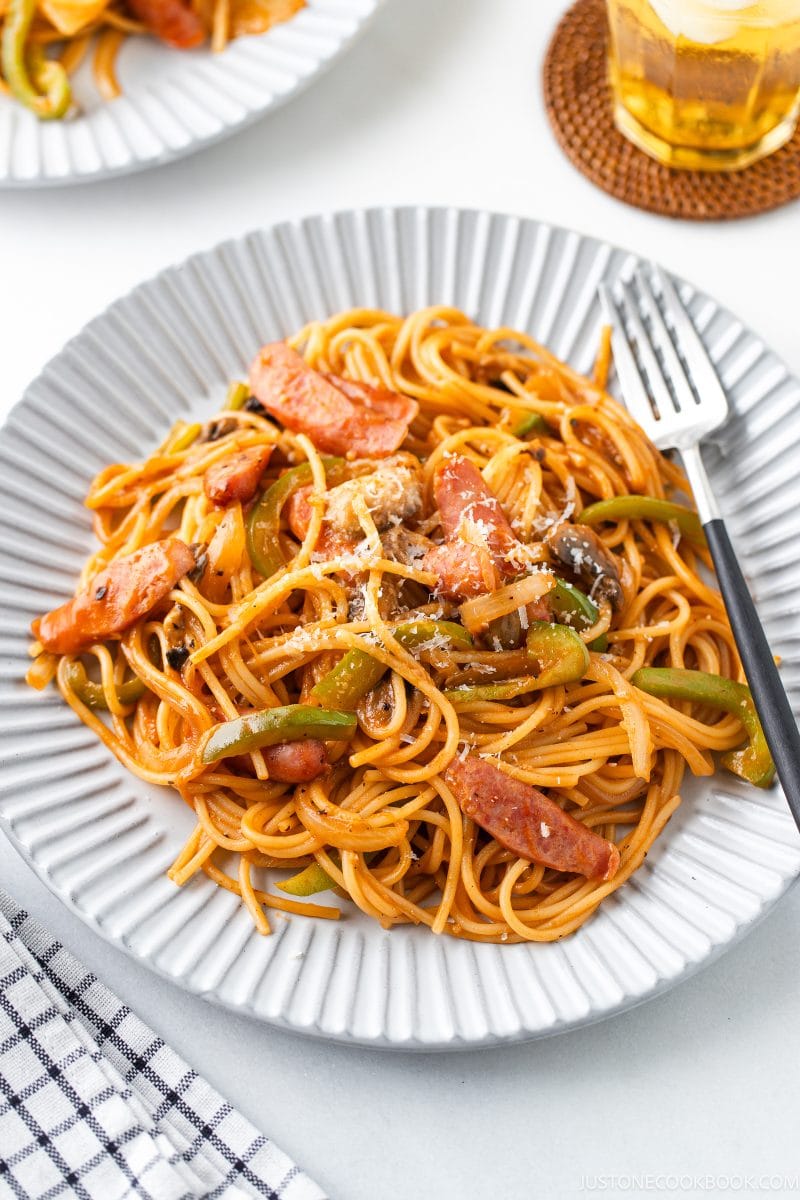
- Serve immediately on individual plates. Shave 2 Tbsp Parmigiano-Reggiano or Parmesan cheese over the pasta now or at the table.

To Store
- Napolitan is at its best straight out of the pan, so it's worth cooking only what you'll eat. If you do have leftovers, store them in an airtight container in the refrigerator for up to 3 days, or in the freezer for up to a month.
Notes
- Spaghetti: Thicker strands, around 1.6–1.9 mm, suit Napolitan best. They hold the sauce and keep their chew through the stir-frying.
- Japanese sausages: Kurobuta or arabiki sausages are sold at Japanese markets. Another type of sausage, ham, or bacon works too.
- Worcestershire sauce: Tonkatsu sauce or soy sauce works as a substitute.
- Vegetarian. Leave out the sausage and add extra mushrooms. A mix of shiitake and button mushrooms gives more texture.
- Add peas. Swap in ½ cup of green peas or sugar snap peas for the bell pepper, or add them alongside.
- Top with a fried egg. Slide a sunny-side-up egg over each plate. The runny yolk makes the sauce even richer.
- Mix up the mushrooms. Use shiitake, cremini, or a blend in place of button mushrooms for a deeper, earthier flavor.
- Add heat. Stir dried red chili flakes into the pasta, or set out hot sauce at the table.
Nutrition
The nutrition facts shown are generated by an online calculator and are estimates only. Please consult a professional nutritionist for specific dietary needs.
Did you make this recipe?
Tag @justonecookbook on Instagram so we can see your delicious creation!
Editor’s Note: This post was originally published on Apr 19, 2013. The post has been republished with updated content, new images, and a slightly-revised recipe on July 25, 2022.
