
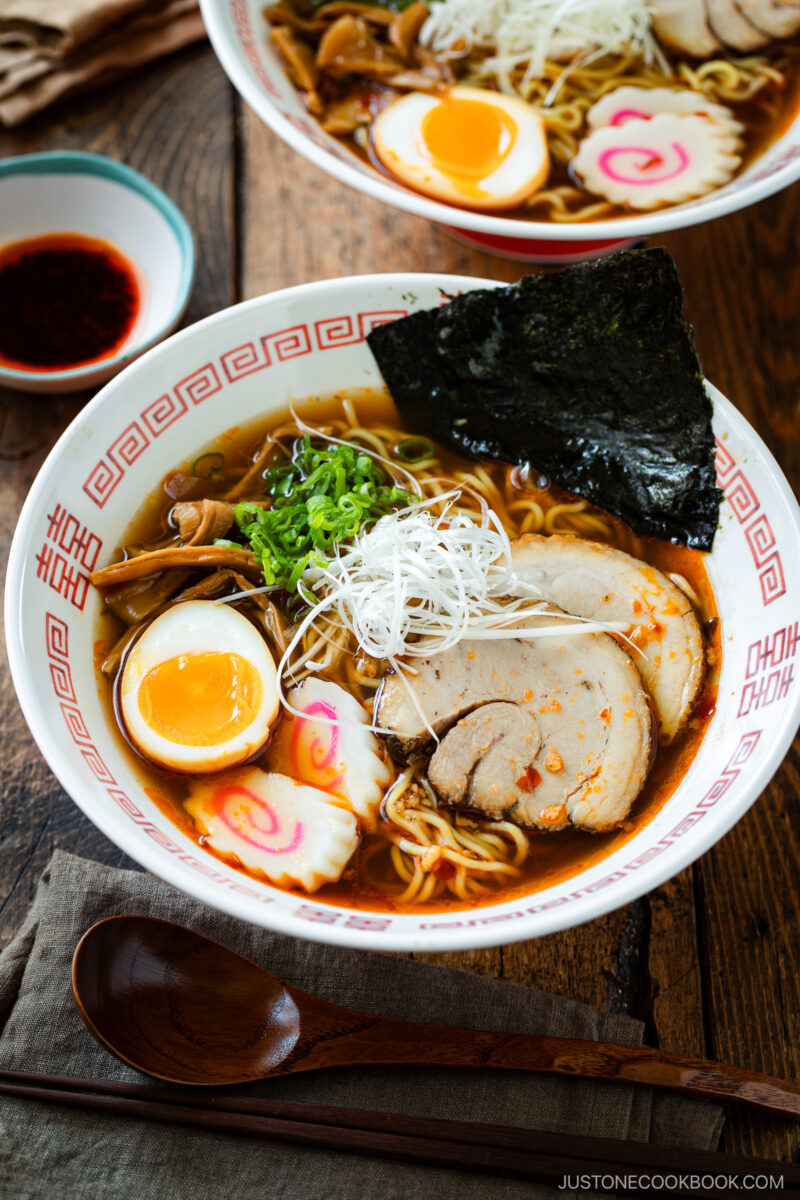
Recipe Highlights
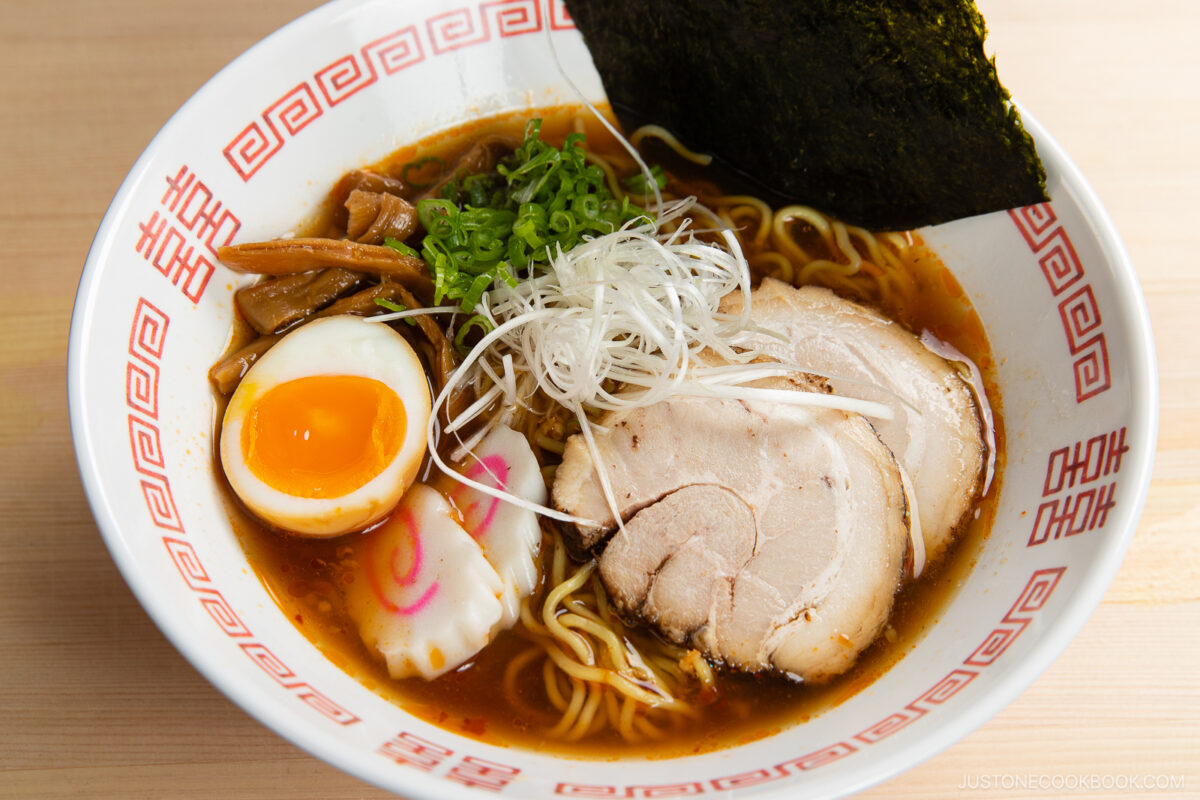
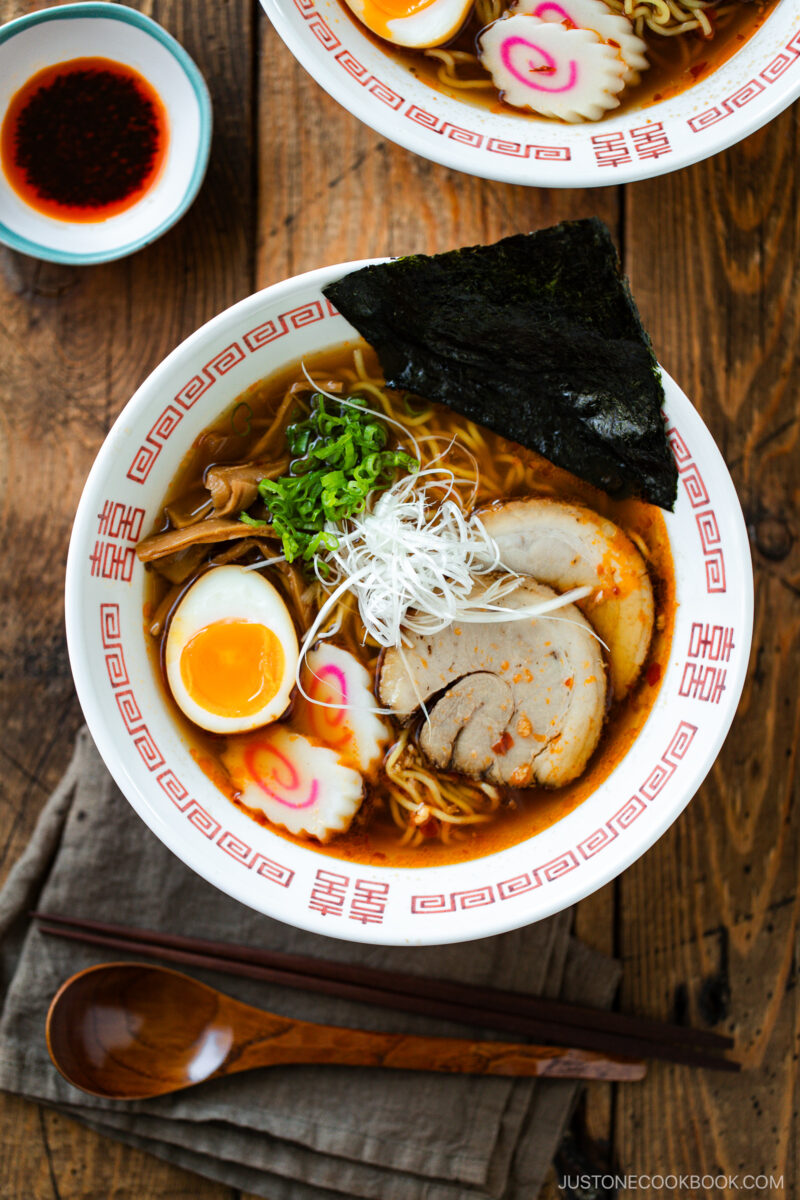
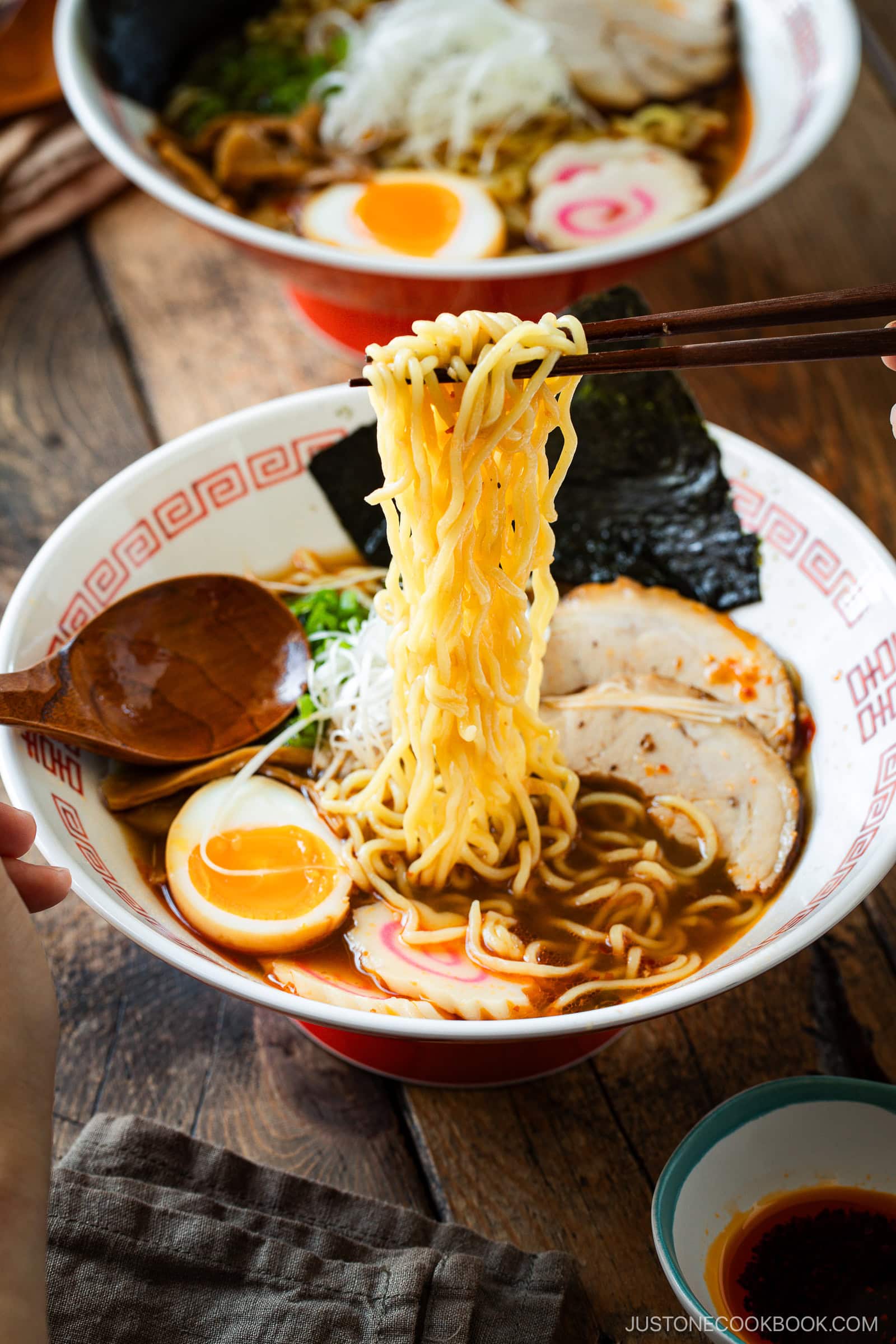
Spicy Shoyu Ramen is a comforting noodle soup with a soy sauce–based broth, gentle heat, and classic ramen toppings. It’s the kind of bowl that warms you from the inside out and delivers big flavor without hours of simmering.
- Savory soy sauce broth with deep, clean flavor
- Gentle heat and umami from doubanjiang that you can adjust to taste
- Easy to assemble at home with make-ahead toppings
If you love Japanese noodle soups, try my Miso Ramen, Vegetarian Ramen, and Easy Tonkotsu Ramen recipes next!
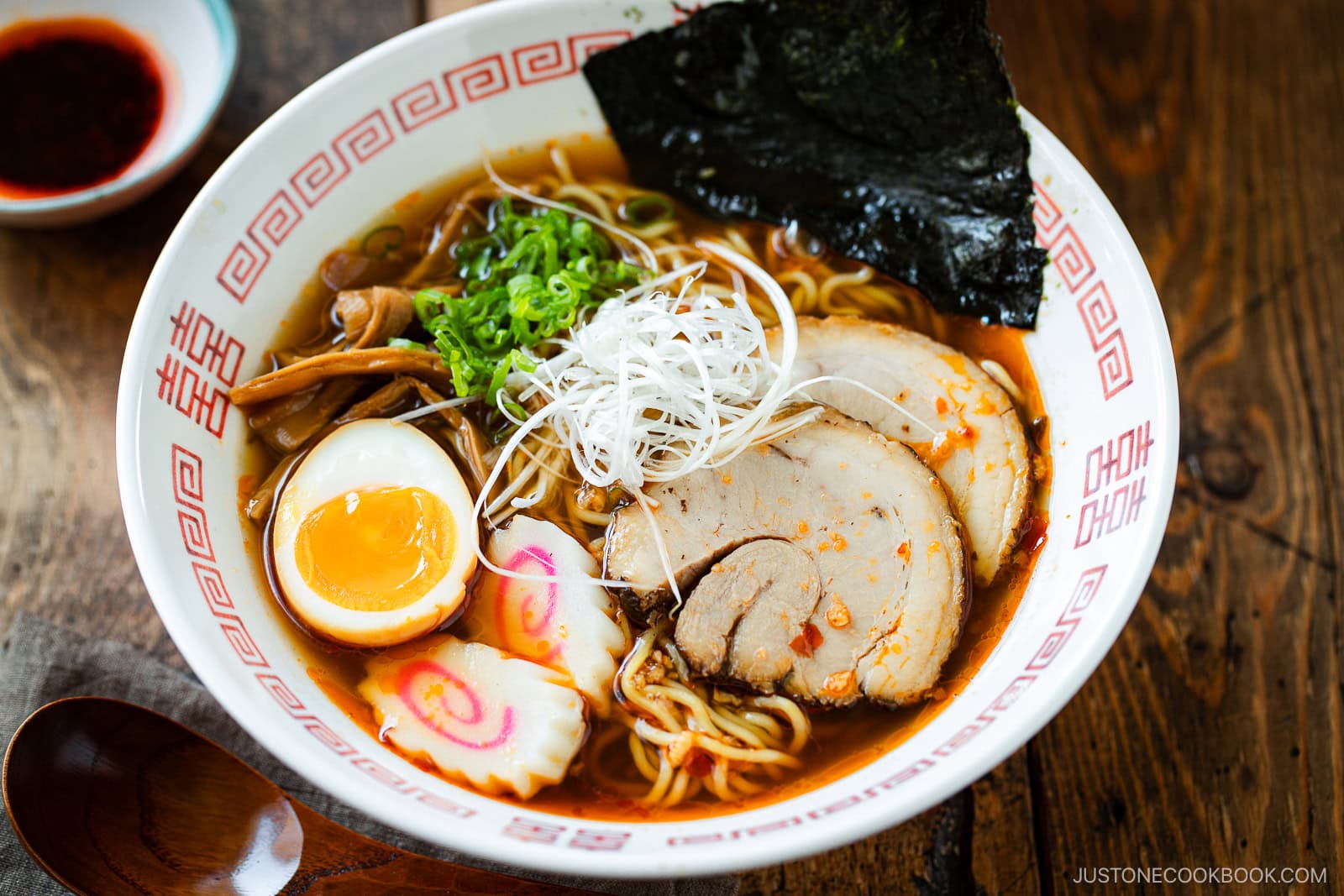
What is Spicy Shoyu Ramen?
My spicy shoyu ramen features a clear, brown broth with soy sauce (shoyu) flavor that’s especially common in Tokyo. Doubanjiang (Chinese fermented chili bean paste) adds gentle heat in this dish. While it’s not traditional in Classic Shoyu Ramen, its use reflects how Japanese cooks have adapted Chinese seasonings into modern ramen variations.
Ingredients for Spicy Shoyu Ramen
- ramen noodles – I recommend the fresh kind found in a Japanese market’s refrigerated section
- chicken stock and dashi (Japanese soup stock) – see How to Make Dashi
- doubanjiang (spicy chili bean paste)
- soy sauce
- ginger and garlic
- roasted sesame oil
- salt and white pepper powder
Toppings:
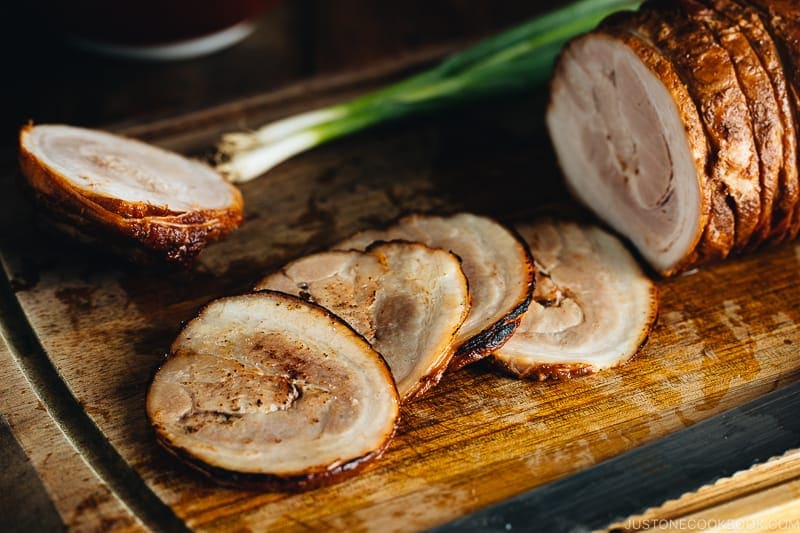
- Chashu – store bought, or make at home the day before
- Ramen Eggs – make the day before
- menma (seasoned bamboo shoots)
- narutomaki (fish cake)
- Shiraga Negi (julienned long green onions)
- green onion/scallion – chopped
- nori
- la-yu (Japanese chili oil) – optional; you can make Homemade La-yu
Find the printable recipe with measurements below.
Jump to RecipeHow to Make Spicy Shoyu Ramen
- Prepare the toppings. Make the chashu and ramen eggs at least one day ahead. This keeps ramen day quick and stress-free.
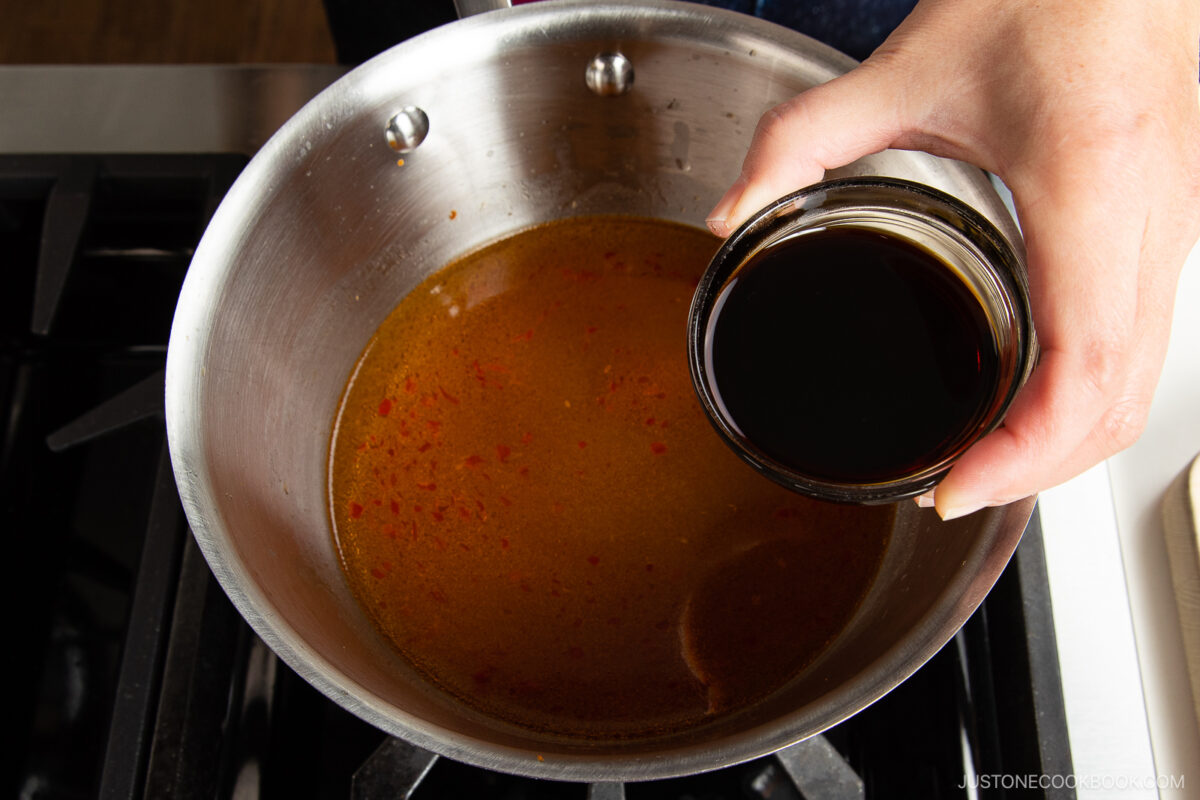
- Make the soup. Combine the soup ingredients in a pot over medium heat. Stir and simmer to blend the flavors together.
- Cook the noodles. Boil the ramen noodles just until al dente. Drain well and divide into each individual large bowl.
- Assemble. Pour the hot soup over the noodles and add your toppings.
- Serve. Serve immediately and enjoy while hot.

Nami’s Recipe Tips
These simple tips will help you make Spicy Shoyu Ramen perfectly every time.
- Prepare toppings ahead. Make chashu and ramen eggs in advance so you can assemble everything in about 30 minutes.
- Adjust the heat. A small amount of doubanjiang goes a long way, so add it gradually.
- Use two types of stock for rich depth. Combine chicken stock with bonito- and kombu-based Japanese soup stock. This layered approach adds rich umami right away, so you don’t need a long simmer to build flavor.
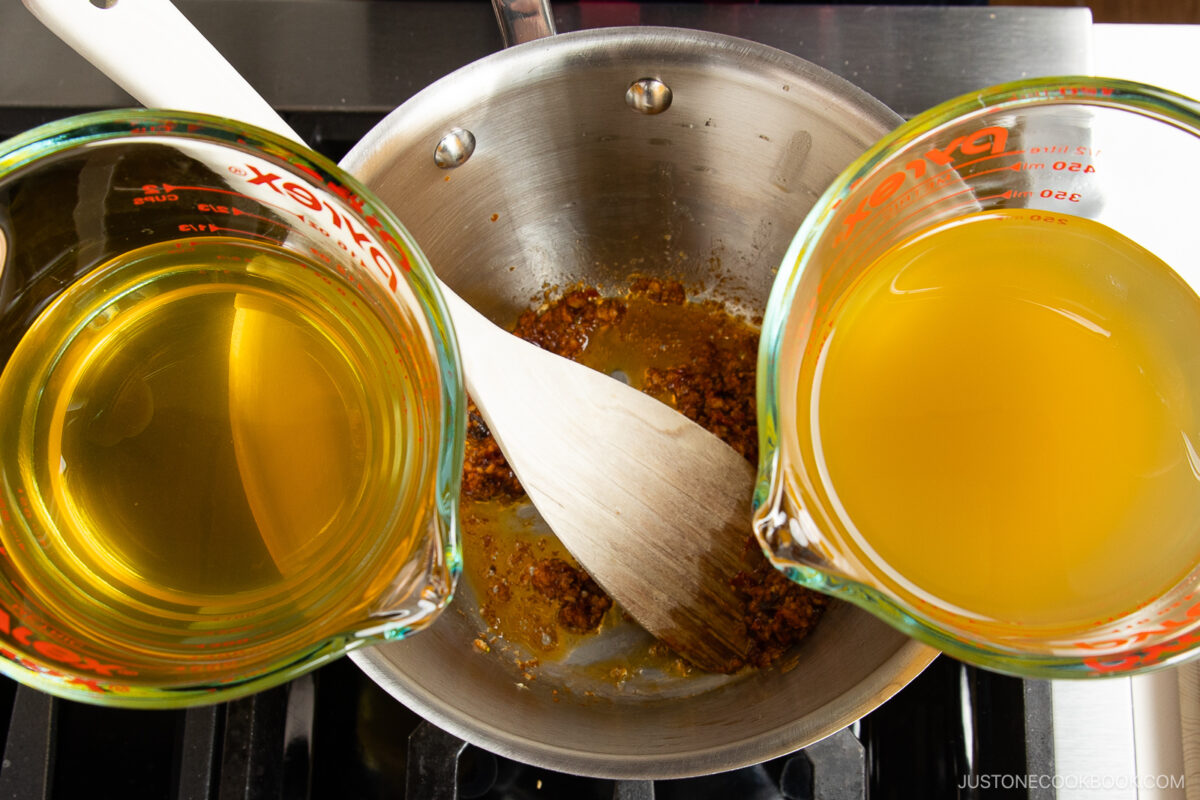
- Don’t substitute. I rely on fragrant aromatics, doubanjiang for a bold savory heat, and two types of stock to create a deeply flavorful broth—fast.
- Cook noodles last. Noodles continue cooking in hot broth, so stop just shy of fully done.
- Serve immediately. Ramen noodles continue to cook in the hot broth, so enjoy them while they’re springy and just right.
Variations and Customizations
Looking to change things up? Try these easy and tasty ideas!
- Add veggies. Try baby bok choy, blanched or Spicy Bean Sprouts, wood ear mushrooms, or corn kernels.
- Vegan/vegetarian. Use vegetable stock and Vegan Dashi for the soup, and try tofu or shiitake mushrooms instead of chashu, egg, and fish cake.
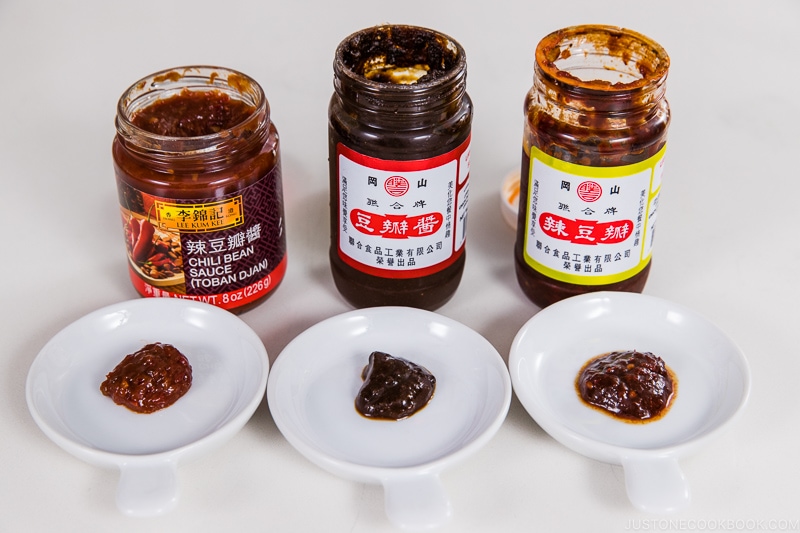
- Adjust the spice level. Use non-spicy doubanjiang (center in photo) or reduce the amount.
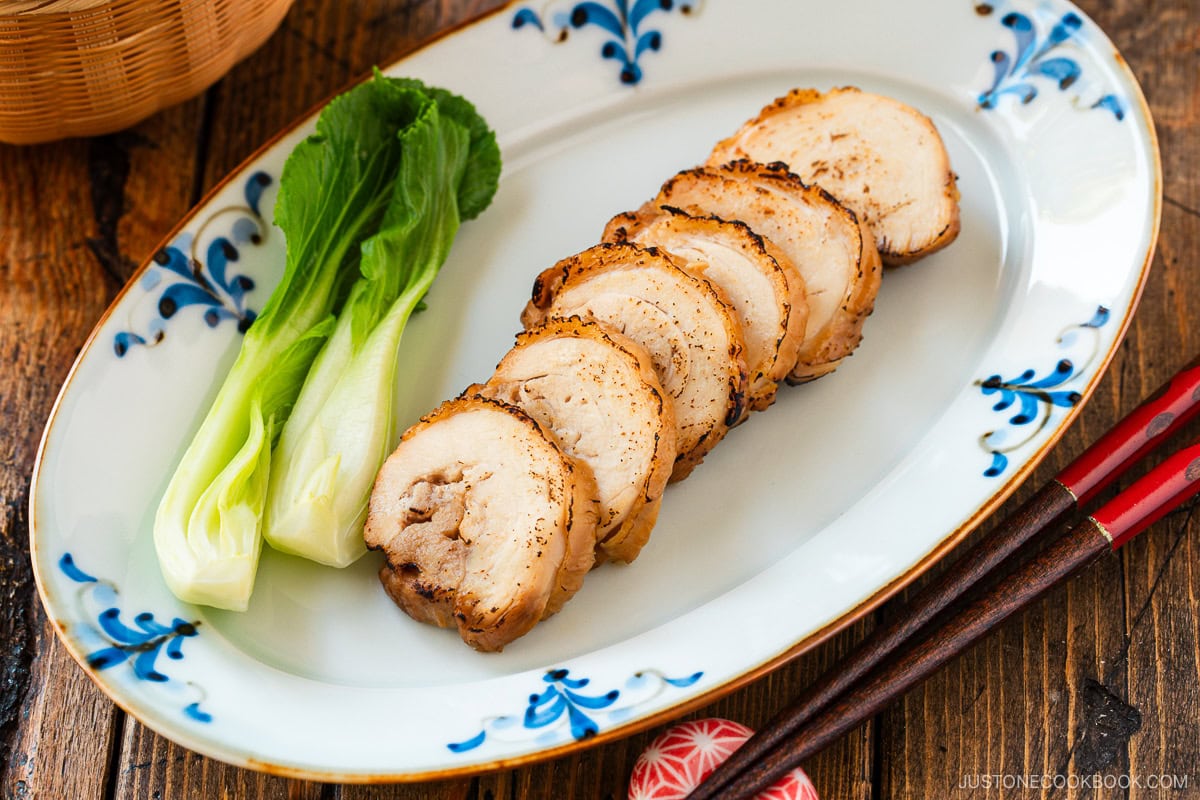
- Try Chicken Chashu. It’s lighter and faster to make than the pork version, and I prefer the taste.
What to Serve with Spicy Shoyu Ramen
This ramen is satisfying on its own, but these classic sides make it feel like a complete ramen shop meal.
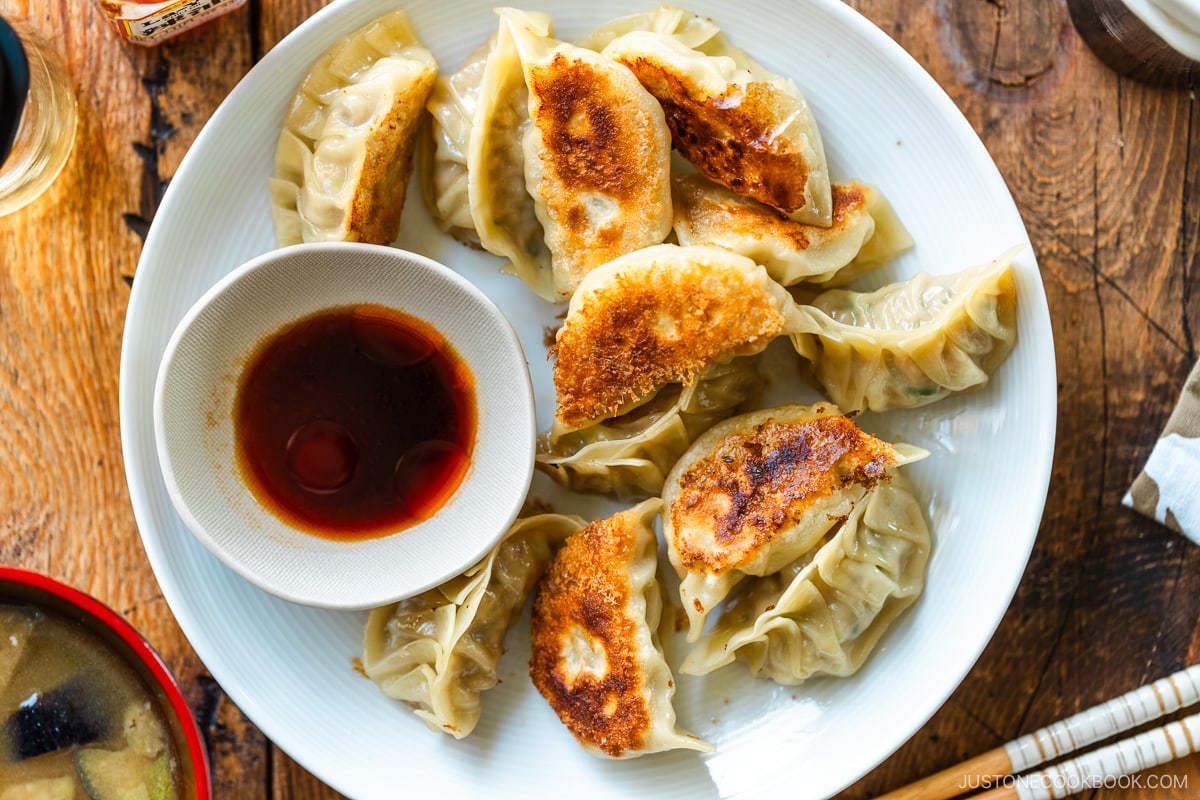
- Gyoza – Crispy pan-fried Japanese potstickers are a natural match for ramen.
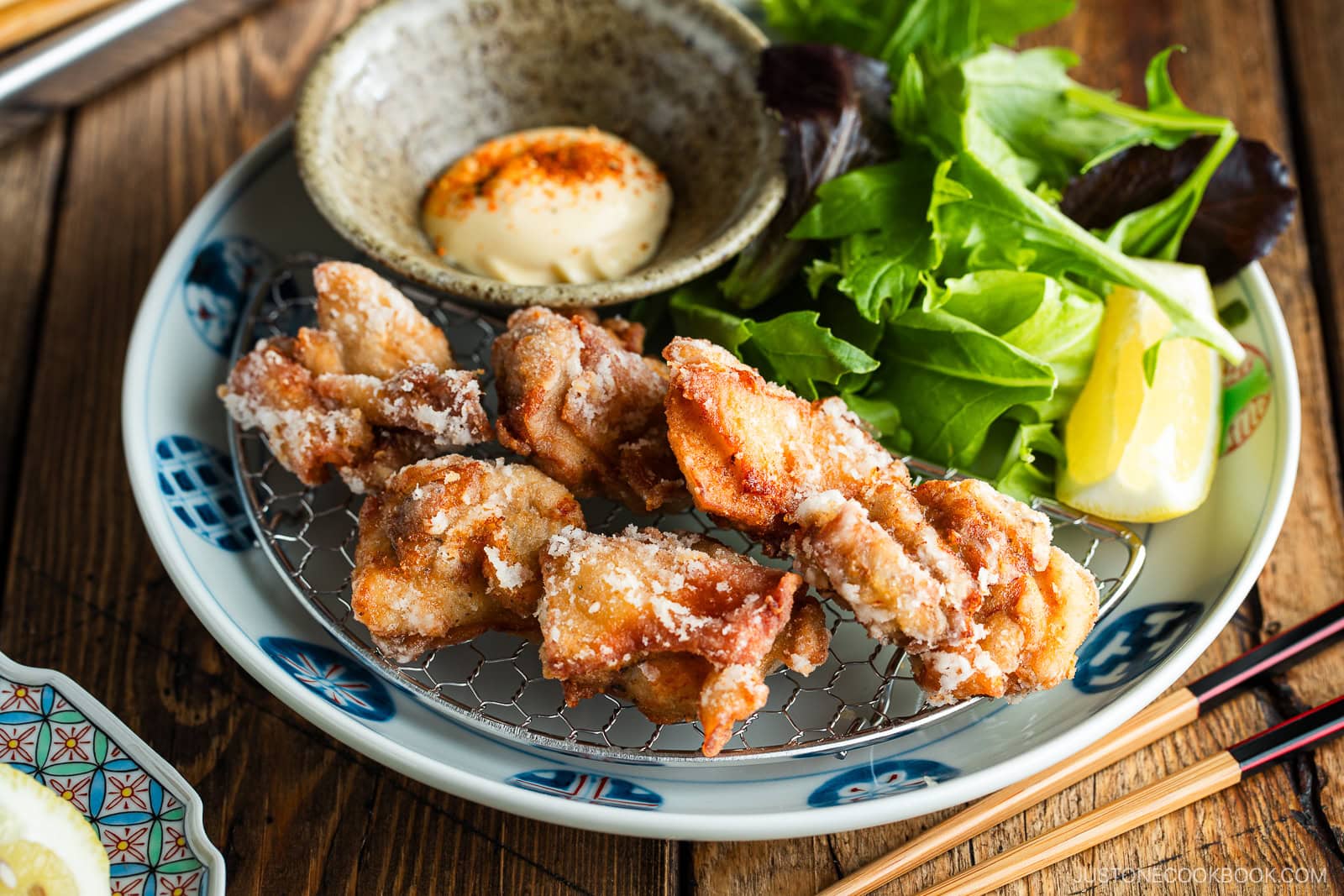
- Karaage – Japanese fried chicken adds richness and crunch that pairs well with the soy-based broth.
- Edamame – Lightly salted edamame offers a simple, refreshing contrast to the spicy soup.
- Japanese Cucumber Salad – Cool, crisp cucumbers in seasoned rice wine vinegar help balance the ramen’s heat and richness.
Storage and Reheating Tips
To store: Store leftover soup in an airtight container in the refrigerator for up to 3–4 days. Store noodles and toppings separately.
To reheat: Reheat the soup gently on the stovetop until hot, then assemble with freshly cooked noodles.
FAQs
Can I make spicy shoyu ramen ahead of time?
You can prepare the broth and toppings ahead, but cook the noodles just before serving. Ramen noodles absorb liquid quickly and lose their texture if stored in broth.
What can I use instead of doubanjiang?
If you can’t find doubanjiang chili paste, you can use gochujang for a spicy option or doenjang for a non-spicy alternative. The flavor will be different, but the broth will still be savory.
Is spicy shoyu ramen very spicy?
The heat level is moderate and adjustable. Start with a small amount of doubanjiang (also called la-doubanjiang) and add more only if you want extra spice. You can also use non-spicy doubanjiang (I use a Taiwanese brand).
Can I make this ramen vegetarian?
Yes. Use vegetable stock instead of chicken stock, vegan dashi instead of awase dashi stock, and replace chashu, egg, and fish cake with tofu or seasoned mushrooms.
I’d love to hear how yours turned out! 💛 Please leave a star rating and comment below to share your experience. Your feedback not only supports Just One Cookbook but also helps other home cooks discover recipes they can trust.
Spicy Shoyu Ramen
Ingredients
- 2 servings fresh ramen noodles (see Notes at the end)
For the Soup Broth
- 1½ cups chicken stock/broth (use vegetable stock for vegan/vegetarian)
- 1½ cups dashi (Japanese soup stock) (I use 2 dashi packets to make the stock; see Notes for more options)
- 2 tsp doubanjiang (spicy chili bean paste) (see Notes)
- 2½ Tbsp soy sauce (see Notes)
- 1 tsp ginger (grated from a 1-inch, 2.5-cm knob)
- 2 cloves garlic
- 1 Tbsp toasted sesame oil
- 1 tsp Diamond Crystal kosher salt
- ⅛ tsp white pepper powder
For the Toppings (prepare in advance)
- 4 slices Homemade Chashu (or store bought; skip for vegan/vegetarian)
- 1 Ramen Egg (sliced in half lengthwise; skip for vegan)
- 4 slices narutomaki (fish cakes) (skip for vegan/vegetarian)
- ¼ cup menma (seasoned bamboo shoots) (buy on Amazon or make my Quick Menma Recipe)
- Shiraga Negi (julienned long green onions) (see Notes)
- 1 green onion/scallion (chopped)
- ½ sheet nori seaweed (cut in half)
- la-yu (Japanese chili oil) (optional; make my Homemade La-yu)
Instructions
Before You Start
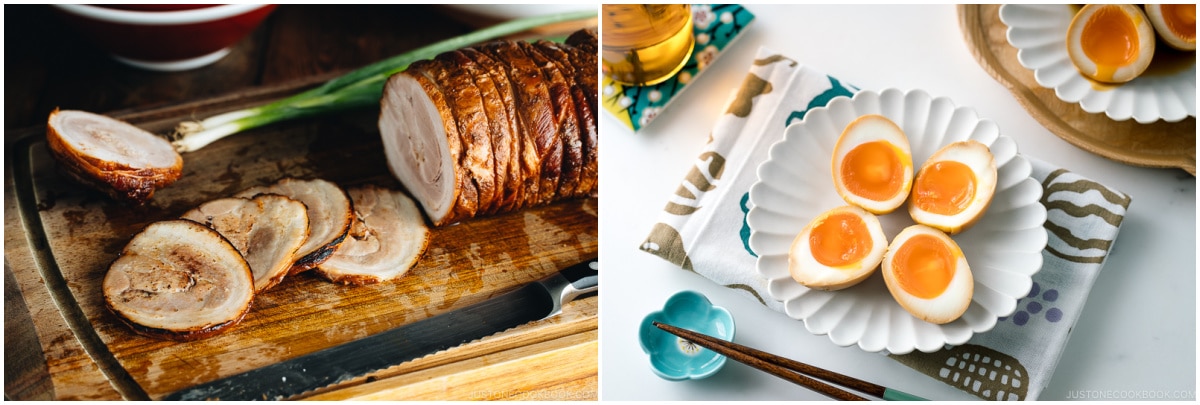
- Prepare the ramen toppings ahead of time. Make my Ramen Eggs and Homemade Chashu a day in advance, so they’re ready to serve with your piping-hot ramen.
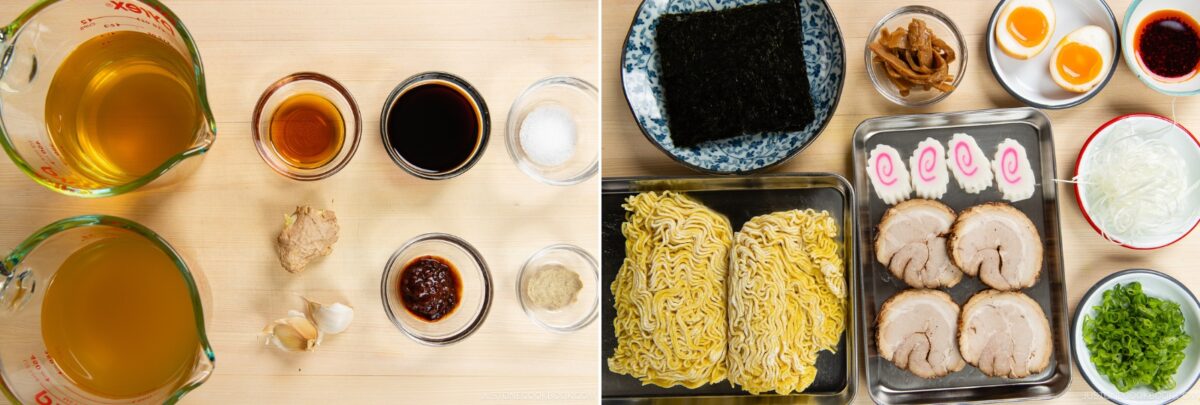
- Gather all the ingredients. Nami's Tip: A typical ramen bowl holds 1200–1400 ml. Plan for 1½ cups (360 ml) of broth per bowl. Using larger bowls? Be sure to prepare extra broth to fill them properly.
To Prepare the Soup Broth
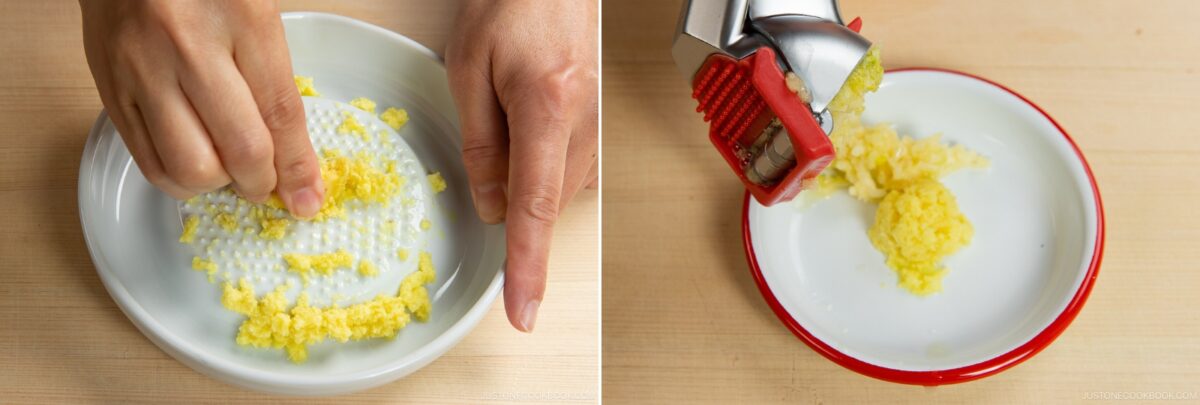
- Prepare the noodle water. Bring a large pot of water to a boil over medium heat while you prepare the soup broth.Peel and grate the ginger (I use a ceramic grater) and reserve 1 tsp ginger with juice. Mince 2 cloves garlic (I use a garlic press). Nami's Tip: If you’re unsure how much ginger flavor to use, start with less and add more later.
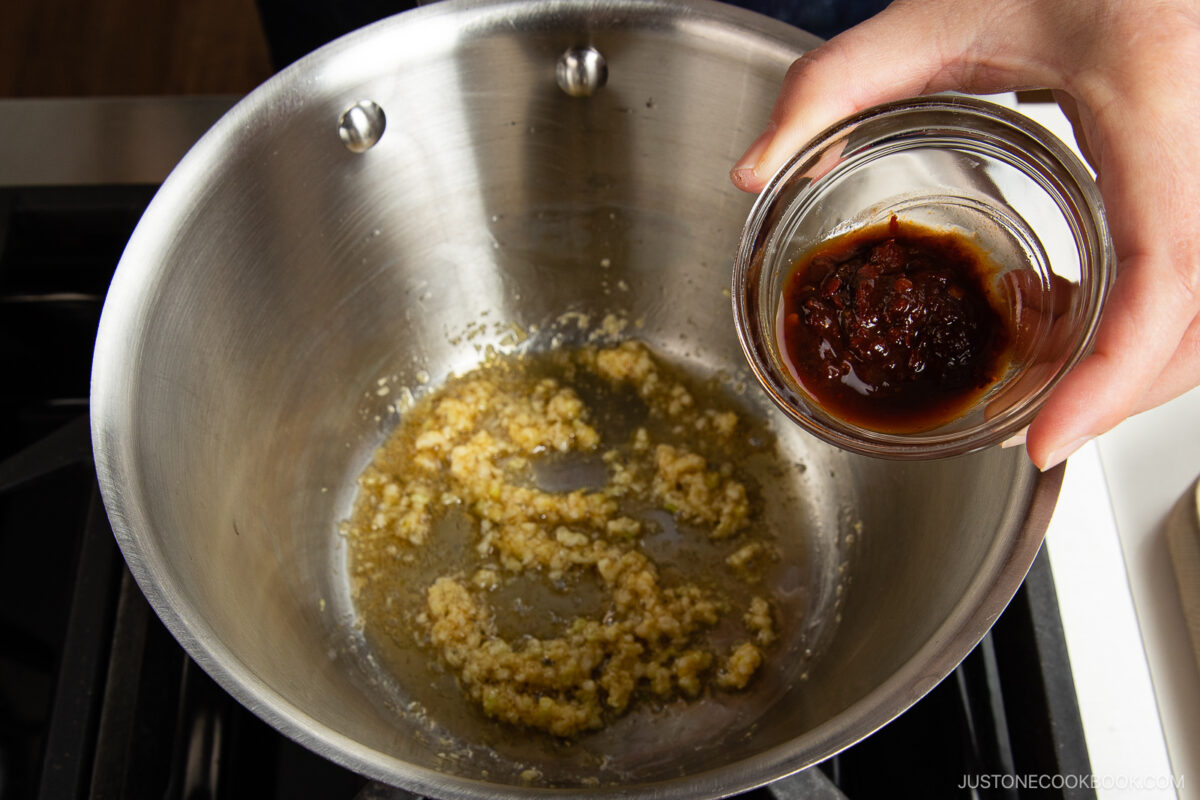
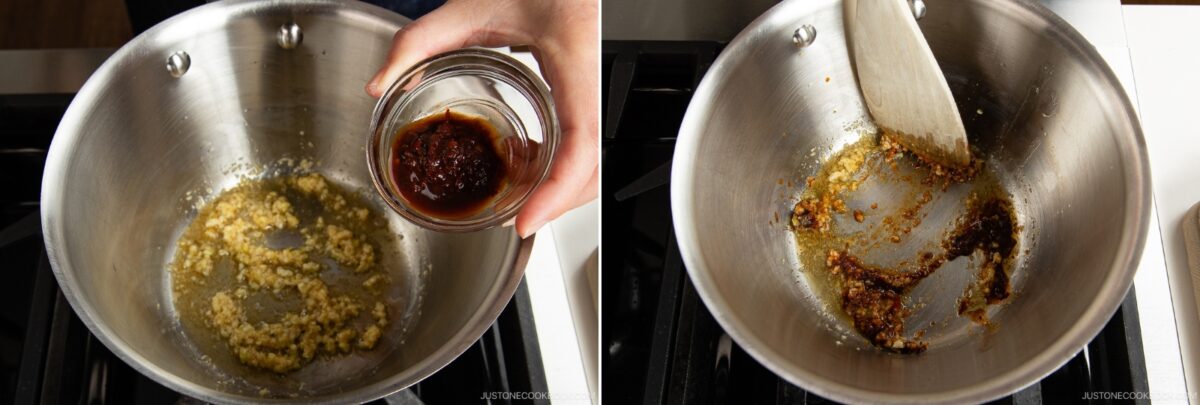
- Set a small saucepan over medium-low heat. Add 1 Tbsp toasted sesame oil, the garlic, and the grated ginger with juice. Cook until fragrant, about 1–2 minutes.Nami's Tip: Feel free to adjust the amount of aromatics to your taste, and be careful not to burn them.
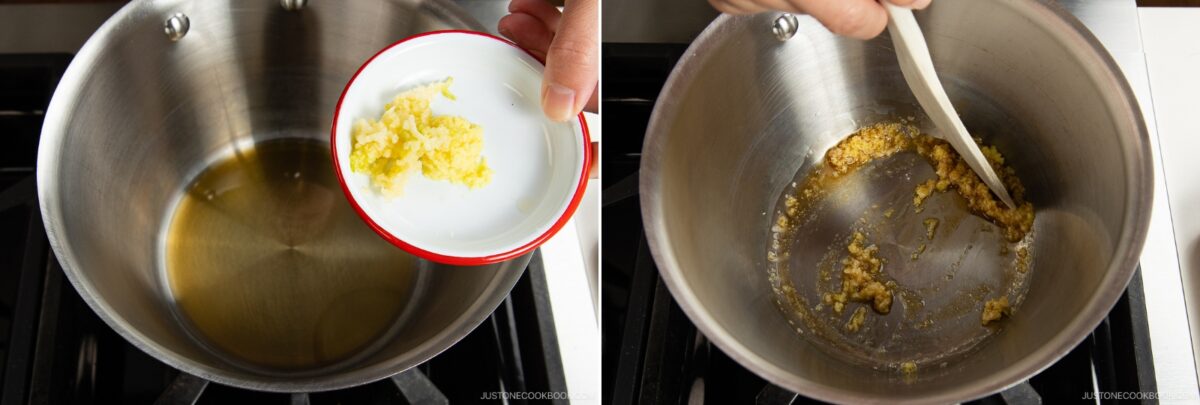
- Add 2 tsp doubanjiang (spicy chili bean paste) and stir for 15 seconds.
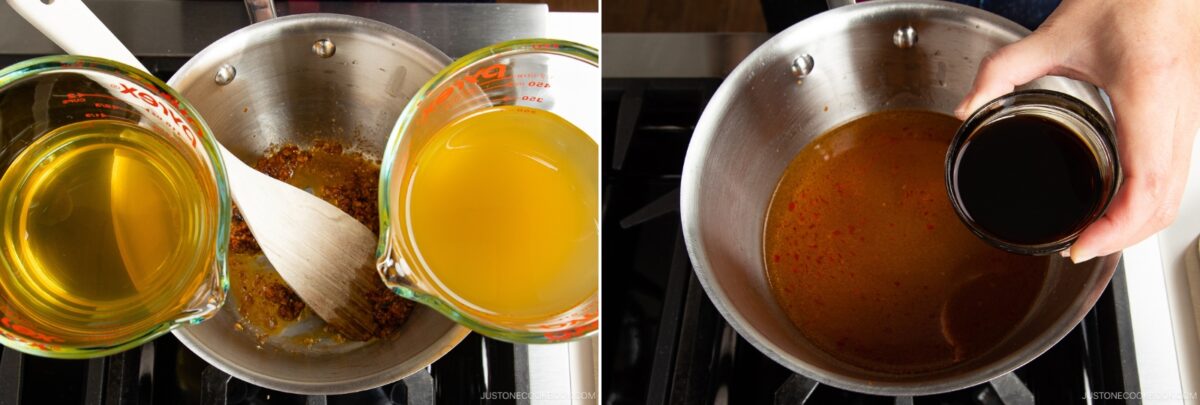
- Add 1½ cups chicken stock/broth, 1½ cups dashi (Japanese soup stock), and 2½ Tbsp soy sauce and bring it to a boil.Once boiling, reduce the heat and simmer for a few minutes.
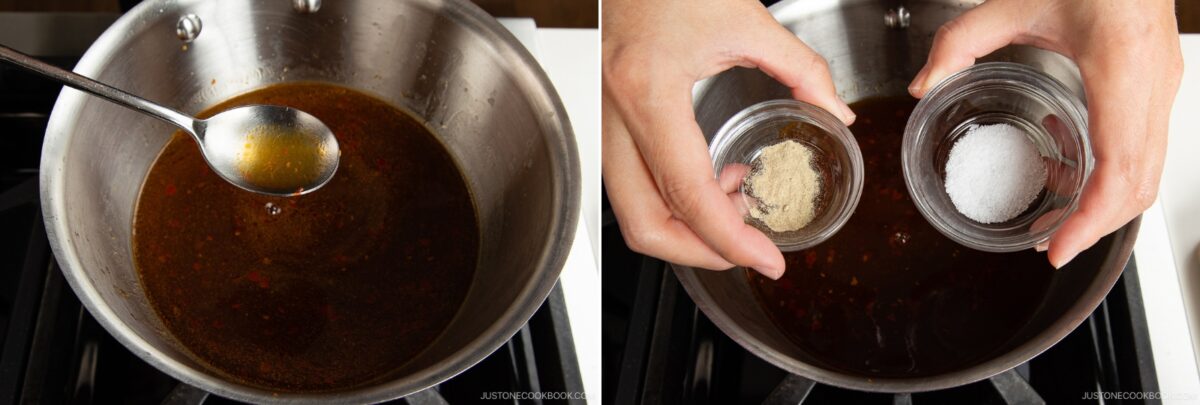
- Taste and adjust the soup. Add 1 tsp Diamond Crystal kosher salt and ⅛ tsp white pepper powder. Don’t be shy with the salt—the broth will taste less salty once you add the noodles. Cover, reduce the heat to low, and keep the soup at a gentle simmer while you quickly boil the noodles.Nami’s Tip: Have the soup hot and ready before the noodles are done. Ramen should be assembled quickly so everything stays perfectly hot.
To Cook the Noodles
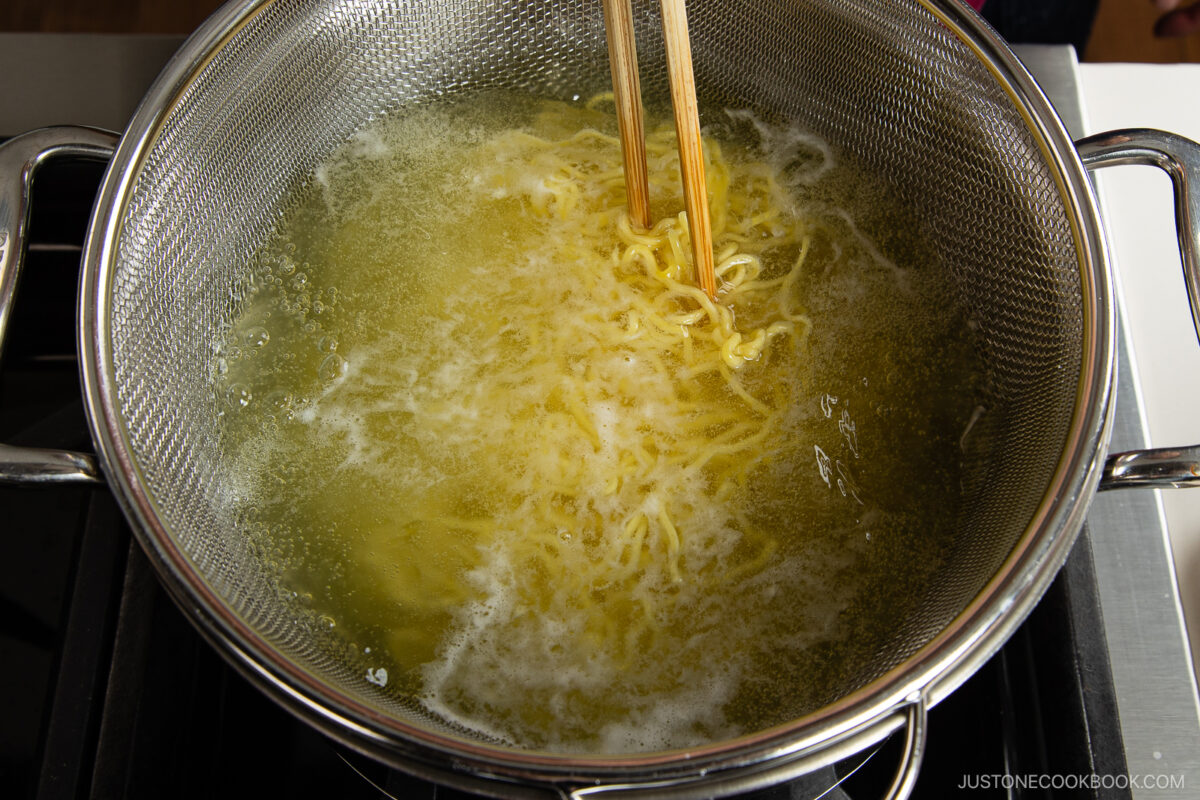
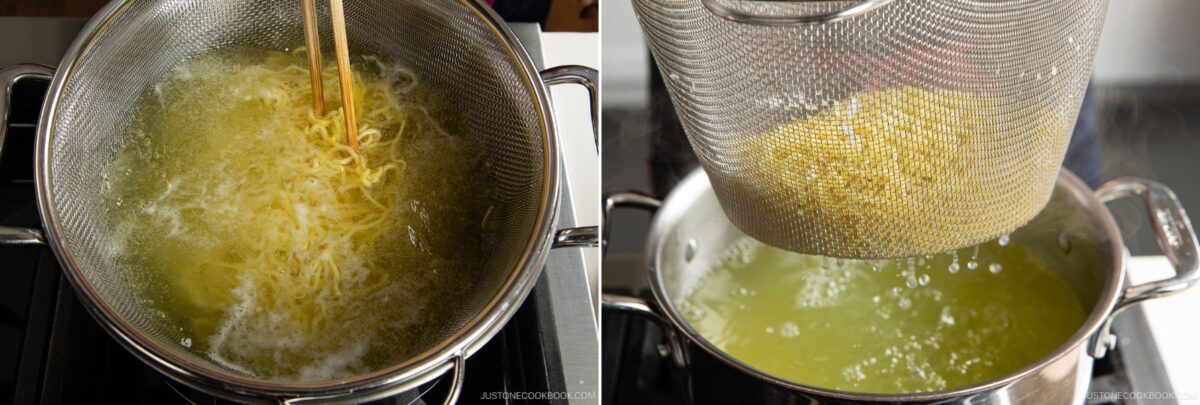
- Before cooking, loosen up 2 servings fresh ramen noodles with your hands. Once the pot of water is boiling, add the noodles and cook according to the package instructions. Here, I cook them in a big noodle strainer set inside the pot.
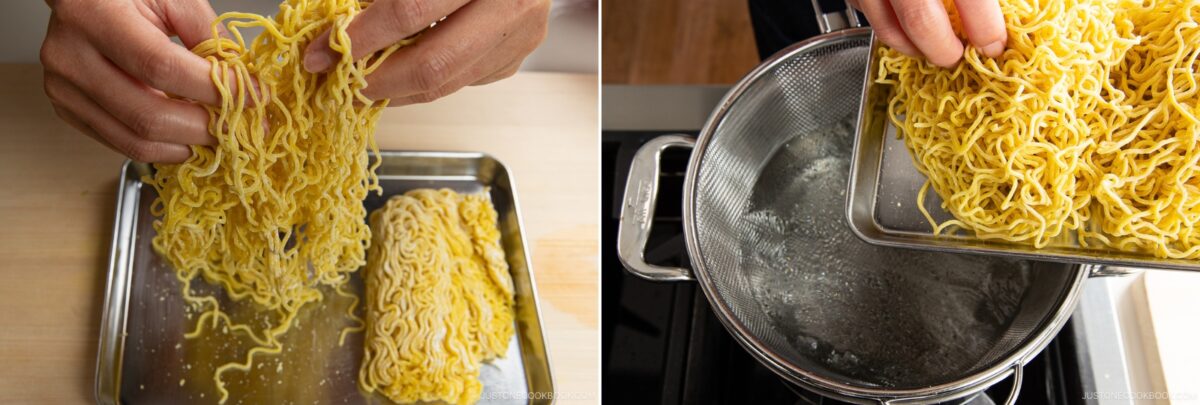
- While cooking, stir and separate the noodles with chopsticks. When the noodles are done, drain in a strainer, shaking it a few times to drain off the excess water (otherwise it will dilute the soup broth).
To Serve
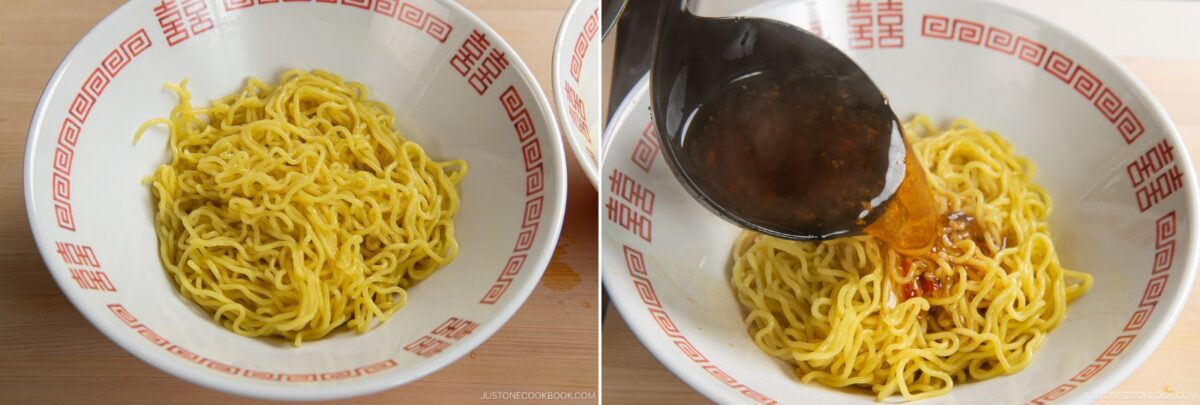
- Divide the noodles into the individual ramen bowls. Pour about 1½ cups (360 ml) hot soup broth into each bowl.
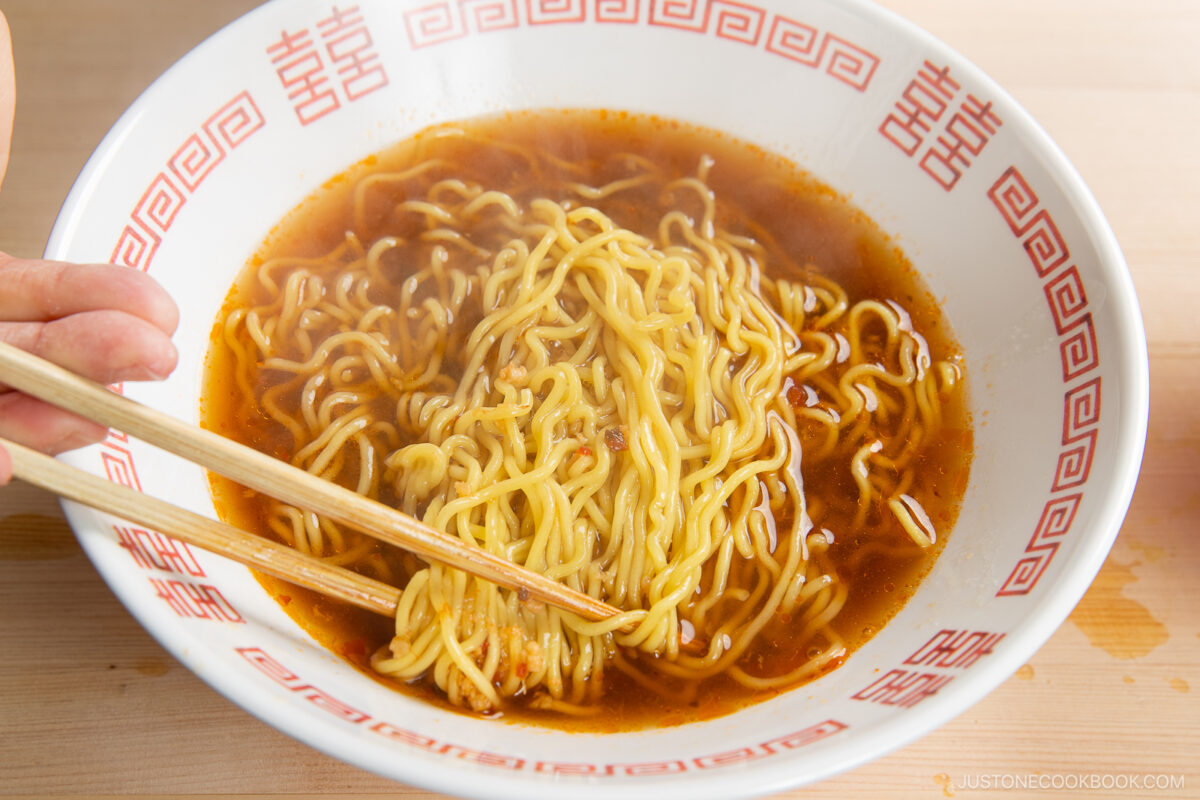
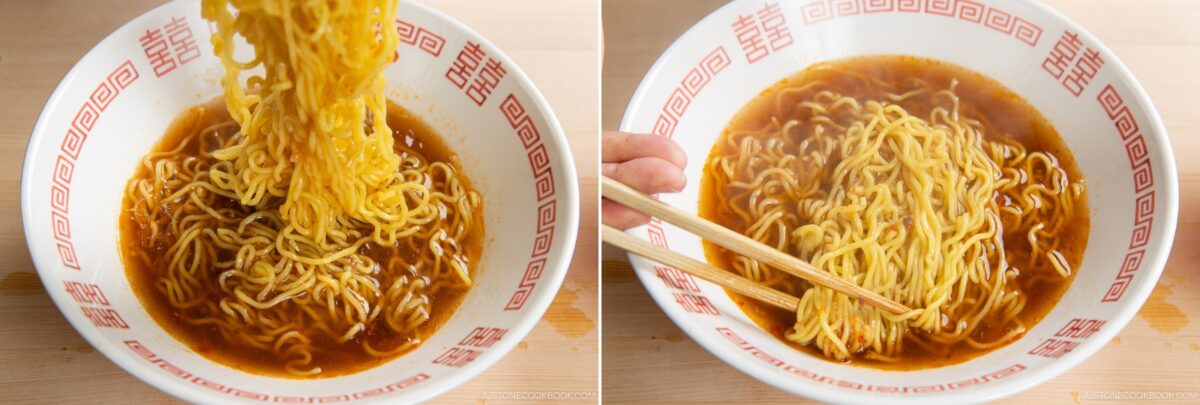
- Now, arrange the noodles. Lift the soup-soaked noodles high with chopsticks and straighten them. When aligned, fold them from one edge of the bowl over themselves to form a clean, beautiful bundle.
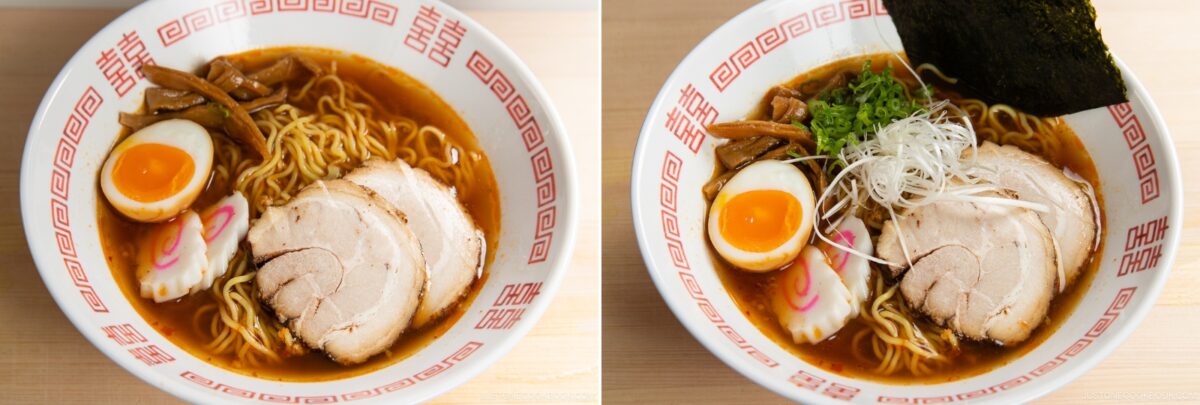
- Quickly arrange the prepared toppings on the noodles. Serve immediately and season to taste with additional white pepper powder and optional la-yu (Japanese chili oil).
To Store
- Keep the leftover soup and toppings separately in airtight containers and store in the refrigerator for up to 3 days. Cook the noodles right before serving.
Notes
- Ramen noodles (2 servings): 10–12 oz (283–340 g) fresh noodles, or 6.3 oz ( 180 g) dry ramen noodles. For gluten free, substitute GF ramen noodles.
- Dashi: For a strong dashi flavor, I use 2 dashi packets to make the stock. You can also use standard Awase Dashi, dashi powder, or Vegan Dashi.
- Doubanjiang: Use either spicy or non-spicy type or gluten-free doubanjiang.
- Soy sauce: For gluten free, substitute GF soy sauce.
- Julienned long green onion: Follow my simple instructions to prepare Shiraga Negi.
- Add veggies. Try baby bok choy, blanched or Spicy Bean Sprouts, wood ear mushrooms, or corn kernels.
- Vegan/vegetarian. Use vegetable stock and Vegan Dashi for the soup, and try tofu or shiitake mushrooms instead of chashu, egg, and fish cake.
- Try Chicken Chashu. It’s lighter and faster to make than the pork version, and I prefer the taste.
- Adjust the spice level. Reduce the amount of doubanjiang or use non-spicy doubanjiang.
Nutrition
Did you make this recipe?
Tag @justonecookbook on Instagram so we can see your delicious creation!
Editor’s Note: The post was originally published on Nov 28, 2011. It was updated with new images on May 15, 2023, and republished with more helpful information on February 18, 2026.