


This post may contain affiliate links. Please read my disclosure policy.
Recipe Highlights
Dashi is the soup stock at the heart of Japanese cooking, and it’s what gives Japanese dishes their distinctive depth of flavor. I usually reach for my homemade Kombu Dashi (昆布だし) when making soups, simmered dishes, and hot pots.
When I’m meal prepping, I’ll start a batch of cold-brew kombu dashi the night before. On busy weeknights, a quick stovetop simmer makes dashi ready in minutes.
Here’s why I keep coming back to this recipe:
- The easiest dashi to make from scratch, with just two ingredients
- Naturally vegan—no animal products
- Make it two ways: a hands-off cold brew method or a quick stovetop simmer
To learn more about Japanese soup stocks, read my in-depth guide: What is Dashi and How to Make It. Looking for other plant-based dashi recipes? Try my Vegan Dashi and Shiitake Dashi recipes next.

What is Kombu Dashi?
Kombu dashi (昆布だし) is a clear Japanese soup stock made by steeping kombu (dried kelp) in water.
This dashi is naturally vegan since it relies entirely on dried kelp. Kombu is rich in glutamic acid, the amino acid behind umami, which gives the broth its deep, savory flavor.
Other common Japanese soup stocks include Katsuo Dashi and Awase Dashi, a mix of both kombu and katsuobushi (dried bonito flakes).
Ingredients for Kombu Dashi
- Kombu (dried kelp)
- Water
Find the printable recipe with measurements below.
Jump to RecipeHow to Make Kombu Dashi
- Prep the kombu. Wipe the kombu with a tightly wrung-out damp cloth, leaving any white powder intact. Cut slits in the kombu to help release more flavor.
- Method one: Cold-brew Kombu Dashi (Mizudashi). Add the kombu and water to a large jar or pitcher. Steep covered at room temperature for 2 to 3 hours in summer, 4 to 5 hours in winter, or overnight in the refrigerator. Remove the kombu before using.
- Method two: Stovetop Kombu Dashi (Nidashi). Add the kombu and water to a pot and steep for at least 30 minutes. Heat over medium-low, skimming any scum with a fine-mesh skimmer, until barely simmering, about 10 minutes. Remove the kombu just before it simmers and turn off the heat.
- Use or store. Use the dashi right away, or refrigerate it in an airtight container for later.


Nami’s Recipe Tips
Keep these tips in mind for the best results every time.
- Don’t wash off the white powder – That’s mannitol, the key source of kombu’s umami. Wipe away any dirt with a tightly wrung-out damp cloth—never rinse under water.
- Soak first for extra depth – For extra depth of flavor, soak the kombu in cold water for 3 hours or up to half a day before cooking on the stovetop.
- Score the kombu – Cut a few small slits along the sides of the kombu before steeping to help the umami compounds escape into the water.
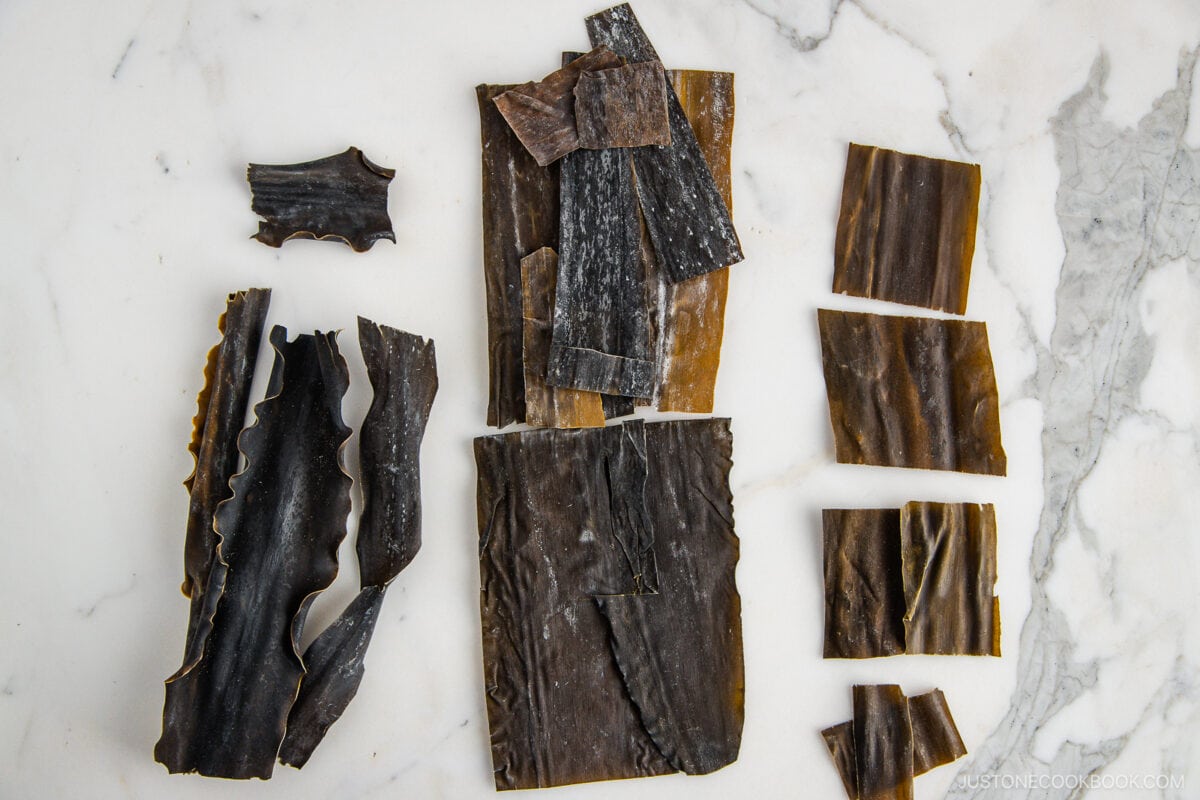
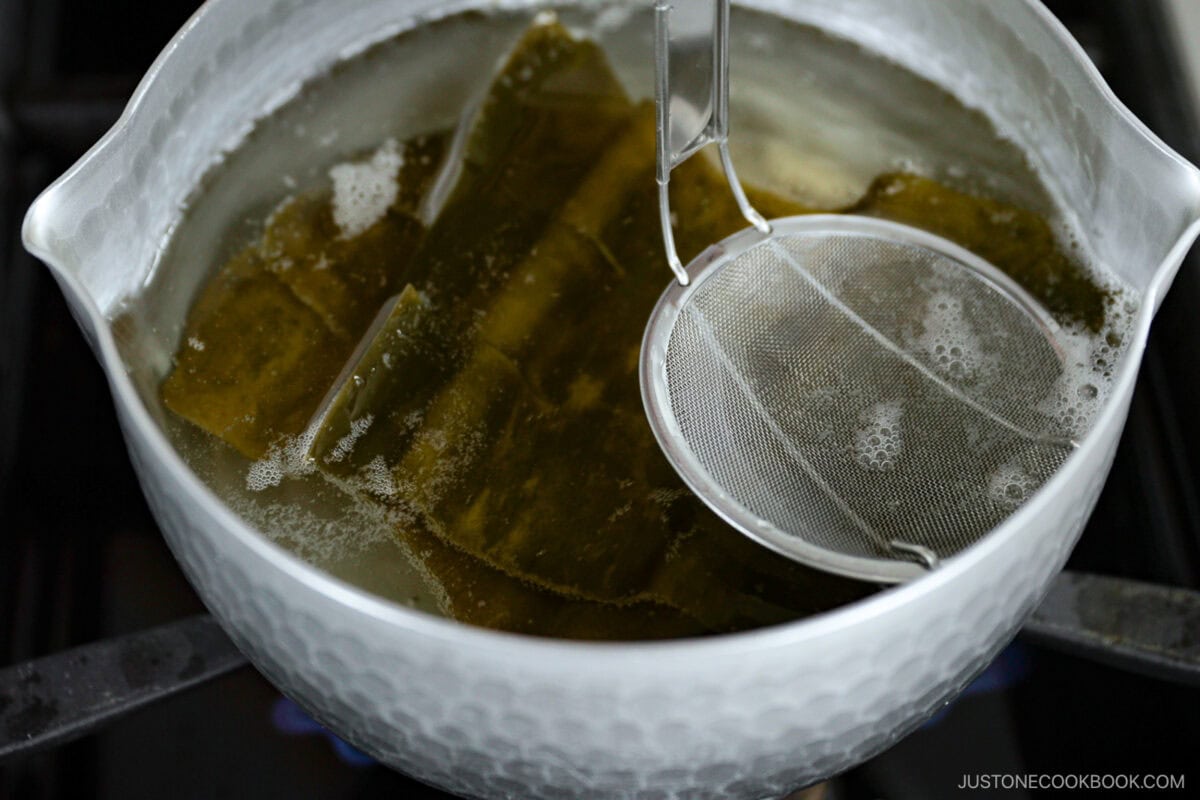
- Keep the heat low – Bring the pot to a simmer slowly over medium-low heat, giving the kombu time to release its full flavor.
- Remove the kombu before simmering – Pull the kombu out of the pot right before it simmers. Don’t let it boil—it makes your dashi slimy and bitter.
- Save your cooked kombu – Refrigerate for up to a week, or freeze in an airtight container for up to a month to make Kombu Tsukudani (Simmered Kombu) and Furikake (Japanese Rice Seasoning).


Variations
Here are a few easy ways to make this recipe your own.
- Add dried mushrooms. Add a few dried shiitake mushrooms to the bottle or pot for a fuller, earthier flavor. Known as Vegan Dashi or shojin dashi, this stock is a staple of shojin ryori, the traditional vegetarian cuisine of Japanese Buddhist temples.

- Stronger stock. Double the amount of kombu for noodle soups and hot pots, where a more prominent dashi flavor is required.
- Experiment with kombu. Different varieties of kombu bring subtle differences in flavor and aroma to the broth. Use my kombu guide to learn about each type and find your favorite.
How to Use Kombu Dashi
Once your stock is ready, try these recipes:
- Vegan Miso Soup – A simple miso soup with silken tofu and wakame seaweed, ready in 20 minutes.
- Kenchinjiru – A warming vegetable soup with plenty of vegetables and tofu, rooted in Zen Buddhist temple cuisine.
- Yaki Onigiri Chazuke – A crunchy grilled rice ball in a comforting kombu dashi broth.
- Dashimaki Tamago – A silky, savory rolled omelette made with kombu dashi whisked into beaten eggs.


Storage and Reheating Tips
To store: Transfer the cooled dashi to an airtight container or bottle. Refrigerate for up to 4 to 5 days, or freeze for up to 2 weeks. Use it sooner for the best flavor.
To reheat: Warm gently in a saucepan over medium-low heat until just steaming. Avoid boiling, which dulls the flavor.
FAQ
Is kombu dashi the same as dashi?
Kombu dashi is one of the Japanese soup stocks. Made with only kombu and water, kombu dashi is naturally vegan and differs from Awase Dashi, the common Japanese dashi. Awase dashi combines kombu with dried bonito flakes (katsuobushi).
Why is my kombu dashi slimy and bitter?
When the kombu is heated past a simmer or left in water too long, it becomes bitter with a slimy texture. Pull the kombu out right before the water reaches a bare simmer on the stove to keep the broth clean and clear. When using the cold-brew method, take out the kombu after 2 to 3 hours in summer, and 4 to 5 hours in winter.
What’s the difference between kombu dashi and vegan dashi?
Kombu dashi uses only kombu, for a lighter flavor and clearer soup. Vegan dashi combines kombu with dried shiitake mushrooms for a deeper, earthier flavor ideal for heartier soups and stews.
I’d love to hear how yours turned out! 💛 Please leave a star rating and comment below to share your experience. Your feedback not only supports Just One Cookbook but also helps other home cooks discover recipes they can trust.
Kombu Dashi Recipe (Vegan)
Ingredients
- 1 piece kombu (dried kelp) (10 g; 4 x 4 inches, 10 x 10 cm per piece)
- 4 cups water
Instructions
- Gather all the ingredients. Wipe 1 piece kombu (dried kelp) with a tightly wrung-out damp cloth, leaving any white powder intact. Cut a few slits to help release more flavor. Nami's Tip: The white powder is mannitol—the key source of umami. Don't wipe it off. Kombu is fairly clean these days, so wiping may not be necessary.

Method 1: Cold Brew Kombu Dashi (Mizudashi)
- Put 4 cups water and the kombu in a large pitcher or jar. Cover and steep at room temperature for 2–3 hours in summer (4–5 hours in winter) or overnight in the refrigerator. Remove the kombu before using.Nami's Tip: Leaving the kombu in too long makes the dashi slimy and bitter. Save the spent kombu and see below for how to use it in other recipes.

Method 2: Stovetop Kombu Dashi (Nidashi)
- Put 4 cups water and the kombu in a pot. Steep at room temperature for at least 30 minutes before heating.Heat over medium-low and slowly bring it to a bare simmer, giving the kombu time to release its full flavor, about 10 minutes.

- Meanwhile, skim off the scum and foam with a fine-mesh skimmer. Just before the dashi reaches a bare simmer, remove the kombu. Nami's Tip: Leaving the kombu in too long makes the dashi slimy and bitter. Save the spent kombu and see below for how to use it in other recipes.

To Store
- Store the dashi in an airtight container and refrigerate for up to 4–5 days, or freeze for up to 2 weeks. Use it sooner for the best flavor.
To Use the Spent Kombu
- Keep the spent kombu in an airtight container and refrigerate for up to a week, or freeze for up to a month. Use it to make Simmered Kombu (Kombu Tsukudani) or Homemade Furikake (Rice Seasoning).

Nutrition
The nutrition facts shown are generated by an online calculator and are estimates only. Please consult a professional nutritionist for specific dietary needs.
Did you make this recipe?
Tag @justonecookbook on Instagram so we can see your delicious creation!
Editor’s Note: This post was originally published on February 12, 2013, updated with new images in April 2019, and republished with more helpful content on June 3, 2026.

